Showing posts with label energy booster. Show all posts

Tuesday, December 1, 2020

What do Bees Eat?

Did you know that honeybees eat more than just honey? They eat a couple different types of food to stay healthy and have energy to work!

Of course honeybees eat honey! They make it from nectar, the sugary substance flowers make to invite the bees to visit. The honeybees gather this nectar to make into honey. You can learn about how honeybees make honey in our past post called “How Do Honeybees Make Honey?” The honey they eat is the source of carbohydrates and gives them energy. Did you know that honey is a good energy source for humans too!
The pollen baskets are packed full!

Honeybees also eat pollen (a powdery substance flowers make) for their protein. They mix the pollen with nectar and pack it onto their back legs into their pollen baskets. They then carry the pollen home to feed to the brood (baby bees). This pollen keeps the honeybees healthy so they can fight off infection in the hive and help the baby bees grow big and strong.
The milky substance inside the cells is royal jelly.


Royal jelly is a milky, protein rich substance that the honeybees feed special eggs to make them become a queen bee. If the egg wasn’t fed royal jelly then it would become a worker bee, but when an egg is fed the special food it supercharges their development so that they are able to lay eggs and become a queen bee. Royal jelly is made from glands in the bees’ head. Some people like to eat royal jelly because it has so many healthy proteins in it. While it doesn’t turn you into a queen bee it can be a great way to keep yourself healthy.

Lastly, honeybees drink water. All living animals need water and honeybees are no different. They look for slow moving sources of water because honeybees can drown. Pollinating and collecting nectar is a hard job and the worker bees need somewhere safe to land to take a drink of water. We wrote back in February about how you can build your own bee water bath!

Saturday, August 1, 2020

8 Household Uses of Honey

Honey is more than a sweet treat! We find antibacterial, antifungal, antimicrobial (cleaning) and hygroscopic (helps with healing) properties in it which makes it useful for much more than eating. If you want to learn how honey gains these properties you can learn about it in our past blog post about enzymes. Honey has many purposes both in and outside of the kitchen. Try out of some of our favorite ways to use honey!

Honey sticks have 1 teaspoon of honey in them which is the perfect amount for a face wash!
Honey sticks have 1 teaspoon of honey in them
which is the perfect amount for a face wash!

  1. Energy boost: Honey has the power to give you energy! A lot of athletes take honey before their competitions. The healthy sugars and protein rich pollen in honey give your body the nutrients it needs to perform!
  2. Face wash: To moisturize and clean your face with honey, simply wet your face with warm water and smooth some honey on your face. Leave it on 10-15 minutes and rinse off. You’ll find that your skin is cleaner, softer, and your pores are smaller. Tip: honey sticks are the perfect size for one face wash. Some Honey Queens like to travel with honey sticks to always have honey on hand for their face washes.
  3. Heal cuts and wounds: Did you know honey can be used to treat small cuts, burns, and bites? Some people even call honey “Nature’s Neosporin because of the cleaning and healing properties. Take some honey on a band-aid and place on your wound. Some hospital use honey as their preferred treatment for burns.
  4. Heal pimples: If you or your older sibling get pimples, you can dab some honey on it next time you get one. The cleaning properties of honey help it go away!
    Try adding honey to your favorite drink
    to soothe your throat
  5. Hair magic: Honey can even be used on your hair! To moisturize your hair so it’s less frizzy and make it shiny, smooth  honey throughout wet hair and leave for 10 minutes before rinsing.
  6. Beauty bath: Some say that Cleopatra bathed in milk and honey to keep her skin healthy and beautiful. Try adding a spoonful or two of honey to the water next time you take a bath!
  7. Soothe your throat: Honey coats your throat whenever you eat it and is a natural cough suppressant. You can add it to tea or your favorite drink or snack. One of our favorite drinks is honey water which you can make by warming up water and adding honey to taste.
  8. Sleep aid: Try taking a spoonful of honey before you go to bed to help you fall asleep!

Monday, January 1, 2018

Honey's Top Ten for 2018

Happy New Year, Honey! A new year equals a new you, and 2018 promises to be the sweetest yet. Start your year off right with these TOP TEN honey tips and tricks!

TEN
You're going to need a lot of energy to make it a great 2018! Try this recipe for Honey Energy Bars. Honey is often called "nature's perfect energy." Whereas refined sugar simply has empty calories, honey contains small amounts of proteins, enzymes, amino acids and minerals.

NINE
Sadly, it's likely you or someone in your family will get sick this winter. Try this recipe for Honey Cough Syrup to soothe your sore throat.

EIGHT
Homemade slime, putty and play dough is all the craze among young people! Try this easy recipe for Honey Play Dough.

SEVEN
There are more than 300 varieties of honey in the US. It all depends on the flower the bee got the nectar from! Make a goal to try at least two new kinds of honey in 2018. Buckwheat honey is great in BBQ sauces and wildflower honey would be delicious in honey butter!

SIX
When Spring arrives, plant a bee-friendly garden in 2018! Plant native flowering plants like Bee Balm, Blackeyed Susan or Goldenrod, and choose flowers that bloom at various times throughout the growing season so the honeybees will have a continuous supply of food.

FIVE
Honeybees add nearly $20 billion to the value of US crop production through pollination! As honeybees gather pollen and nectar for their survival, they pollinate crops like apples, cranberries, melons and broccoli. Try this pollination experiment that uses Cheetos!

FOUR
Read a book about honey, beekeeping or honeybees in 2018! Check your local library or read one of our favorites: Jump into Science: Honeybees, The Honeybee Man or What if There Were No Bees?

THREE
Use honey to help with your seasonal allergies! By eating a few teaspoons of local honey each day, your body can build up an immunity to the pollens in your area.

TWO
Did you know Cleopatra used to take baths with milk and honey for soft and silky skin? You can, too! Try this recipe for Milk & Honey Bath Melts.

ONE
Start every day out right by eating honey for breakfast! Try spooning some into hot tea, drizzling it on your peanut butter toast or sweetening up your oatmeal.

Wednesday, March 1, 2017

Enzymes in Honey


Did you know that the honeybee is the only insect that makes food for humans to eat? Honey is the only food that never spoils! When the honeybee puts the flower nectar into her honey sac inside her body, she mixes three important enzymes into the nectar that makes it into honey. What is an enzyme? An enzyme converts one thing into another. The three enzymes honeybees add to nectar are called invertase, diastase, and glucose oxidase. These enzymes are what give honey its medicinal properties and allows it to stay fresh for many years. 


Once the honeybee flies back to her hive box, she puts the nectar into a wax cell in the honeycomb. When the wax cell is full of nectar, she fans the nectar with her wings to reduce the water content, and now she has made what we call it honey. She caps the cell with a thin layer of wax to protect the honey to use as food later.

Each enzyme added by honeybees serves a purpose. Invertase converts most of the sucrose of nectar into glucose and fructose. In other words, it converts one kind of sugar found in nectar into two alternative sugars. Diastase becomes an essential part of the honey which breaks down starch into glucose. It is important that this takes place because glucose is the easiest sugar molecule to digest. This means that these first two enzymes help make honey healthy for eating. The last enzyme, glucose oxidase works to produce gluconic acid and hydrogen peroxide. Each of these helps protect unripe honey from getting bad bacteria and helps to protect against fermentation. Without these three enzymes, honey could easily become spoiled, would be harder to digest, and could even become contaminated with bacteria.  

Honey is great for eating and baking, but honey can also be used outside the kitchen as well. It has many healing properties and can be used to help with allergies, provide all-natural energy, boost memory, suppress coughs, aid sleep, treat dandruff, heal wounds and burns, strengthen immune systems and even help in anti-cancer treatments. Honey is truly remarkable. Without the honeybee and the special enzymes they produce, we would not have honey. We can be thankful for this special insect ~ the honeybee!

Wednesday, June 1, 2016

Honey: In the Kitchen

Have you ever tried honey and peanut butter together on a sandwich? How about honey on your pancakes for breakfast? Honey is a great complement to every meal! It can be eaten by the spoonful or mixed with other ingredients to make some deliciously sweet  dishes. 
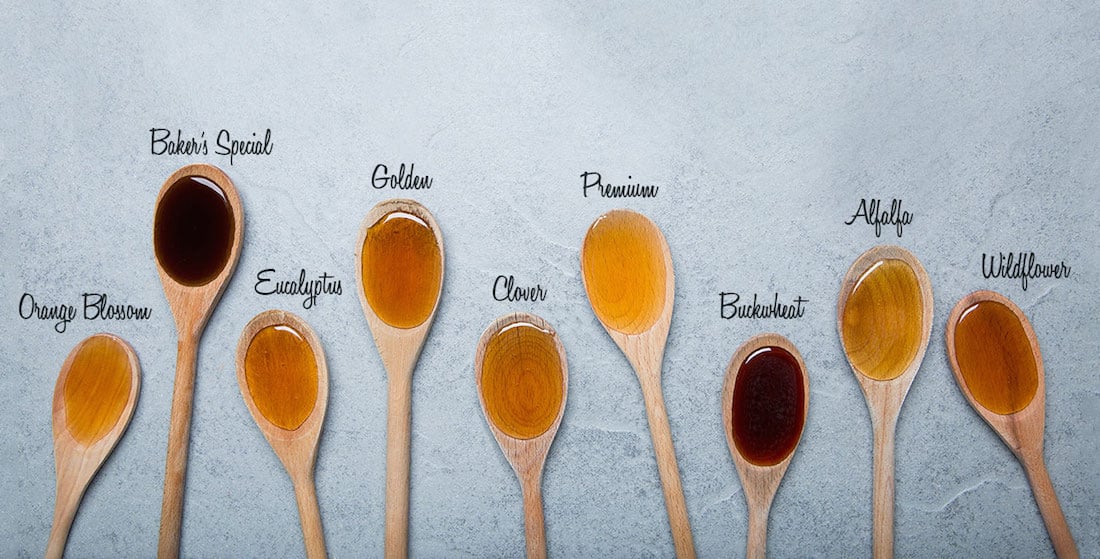
First, choosing which kind of honey you would like to use. Honey comes in all colors and flavors! In fact, there are more than 300 different varieties of honey in the United States and over 3,000 worldwide. Each of these honeys has a different color and flavor. The flavor of honey is determined by the nectar the bees gathered. Different flowers produce different flavors as well as different colors of honey. Some honey can be light in color and very clear, almost like water. Bees can also make honey that is thick and dark like molasses. Typically, the lighter the honey in color, the milder in flavor. Darker honey is stronger and bolder in flavor. Lighter honeys, like clover honey are great to eat on toast or to sweeten drinks. Many people like to sweeten coffee or hot tea with honey. Honey and green tea is great for when you have a sore throat. The hot tea helps to sooth while the honey coats and works to heal your throat. The next time you have a sore or itchy throat, try adding 2 tablespoons of honey to one cup of hot tea. Darker honeys like Buckwheat are great for cooking and baking. 

Here are three tips when you are baking with honey.
  1. Reduce the liquid called for in the recipe by ¼ for each cup of honey used. 
  2. Add ½ teaspoon of baking soda for each cup of honey used. 
  3. Reduce the oven temperature by 25 degrees F to prevent over browning. 

Whether you’re making a honey glaze for a ham or just adding it to fruits or vegetables in a recipe, the stronger honey will add a bold delicious flavor. Try this simple recipe for honey carrots! Combine 1 cup carrots, 1 tablespoon butter and three tablespoons honey. Heat on medium heat for 12 minutes. Stir and enjoy! Both lighter and darker honey is a great alternative to other syrups. If you want to try something new, use honey instead of maple syrup on pancakes and waffles. Or next time you want some chocolate or strawberry milk, try adding honey instead! Try it on your ice cream. 
Besides its deliciously sweet taste, honey also has many health benefits that make it good for you. Honey is a good source of carbohydrates. Carbohydrates are your body’s primary fuel for energy. This makes it a great energy booster! If you play sports, try some honey before your next game or practice to give you an extra energy boost. Many athletes and Olympians use honey for energy. There are also lots of vitamins and minerals in honey. Vitamins and minerals boost your immune system, help you grow and develop properly and help cells and organs do their jobs. Lastly, honey is antibacterial, so it kills bacteria and keeps you healthy. 
One last tip: remember to keep honey in your pantry--not your refrigerator. The cold will cause it to crystallize. However, if your honey does crystallize, put the container in a bowl of warm water and the crystals will dissolve. Honey never spoils!

Saturday, August 1, 2015

Honey, the Liquid Gold

The many colors of honey!
Have you ever wondered why there are different colors and flavors of honey? Each kind of flower produces a different flavor and color nectar that bees use to make honey. We have different kinds of honey because honeybees are flower consistent. This means that instead of going from one kind of flower to another, (like from a sunflower to an orange blossom, and then to a clover flower) she will work one kind of flower on each trip until there is no more nectar in those flowers. When beekeepers bring their bees to pollinate a specific crop, like blueberries, the bees will only be visiting blueberry flowers, so it will make blueberry honey. There are actually more than 300 different kinds of honey in America, and more than 3,000 kinds in the world! Each type of honey has a unique flavor and color. The color of honey can range from a clear “water-white” to a dark brown color. The lighter honeys have a mild flavor, while darker honeys have a strong, bold flavor. It’s fun to try different kinds of honey and taste and see the difference between each of them.


Besides its deliciously sweet taste, honey also has many health benefits that make it good for you. Honey is a good source of carbohydrates. Carbohydrates are your body’s primary fuel for energy. This makes it a great energy booster! If you play sports, try some honey before your next game or practice to give you an extra energy boost. Many athletes and Olympians use honey for energy. Honey is also full of antioxidants which help protect cells in your body from harmful molecules. There are also lots of vitamins and minerals in honey. Vitamins and minerals boost your immune system, help you grow and develop properly, and help cells and organs do their jobs. Lastly, honey is antibacterial, so it kills bacteria and keeps you healthy. 


Honey is also wonderful to use in cooking, and is useful as more than just a sweetener. It can add a special touch to any recipe. With all the unique flavors to choose from, it can add great flavor to your recipes. Honey is a humectant, which is something that holds moisture and water, so it helps keeps baked goods moist and soft. Honey is antibacterial and antifungal so it keeps bacteria and mold from growing and helps baked good last longer. Honey is also an emulsifier and thickener. If you were to take water and oil and mix them together and shake it vigorously, little oil droplets are dispersed throughout the water. Then, if you let it sit, the water and oil will separate. What an emulsifier does is bind things together, so it would help that water and oil to mix together and not separate. Because honey is an emulsifier and thickener, it works well in sauces and dressings. 

Try this delicious and easy honey recipe to cool off and get energized this summer!

Fruity yogurt honey pops 
Honey is a sweet addition to any recipe.

  • 1 cup - pitted cherries or ½ cup strawberries (or other fruit of your choice)
  • 1 cup - nonfat Greek yogurt
  • 2 tablespoons - honey
In a small food processor or blender, puree the fruit for 30 seconds to 1 minute. Do not blend for too long or the puree will become too watery. In a measuring cup or bowl with pouring spout, stir together the yogurt and honey. Stir in about 2 tablespoons of the fruit puree. Taste and add more honey or fruit puree as desired. Pour fruit and yogurt mixture into popsicle molds, filling about ¾ of the way. Add wooden sticks and freeze for at least 3 hours. To remove: run warm water over the bottle of the popsicle mold and gently twist and pull out the popsicles.