Showing posts with label alternative medicine. Show all posts

Tuesday, December 1, 2020

What do Bees Eat?

Did you know that honeybees eat more than just honey? They eat a couple different types of food to stay healthy and have energy to work!

Of course honeybees eat honey! They make it from nectar, the sugary substance flowers make to invite the bees to visit. The honeybees gather this nectar to make into honey. You can learn about how honeybees make honey in our past post called “How Do Honeybees Make Honey?” The honey they eat is the source of carbohydrates and gives them energy. Did you know that honey is a good energy source for humans too!
The pollen baskets are packed full!

Honeybees also eat pollen (a powdery substance flowers make) for their protein. They mix the pollen with nectar and pack it onto their back legs into their pollen baskets. They then carry the pollen home to feed to the brood (baby bees). This pollen keeps the honeybees healthy so they can fight off infection in the hive and help the baby bees grow big and strong.
The milky substance inside the cells is royal jelly.


Royal jelly is a milky, protein rich substance that the honeybees feed special eggs to make them become a queen bee. If the egg wasn’t fed royal jelly then it would become a worker bee, but when an egg is fed the special food it supercharges their development so that they are able to lay eggs and become a queen bee. Royal jelly is made from glands in the bees’ head. Some people like to eat royal jelly because it has so many healthy proteins in it. While it doesn’t turn you into a queen bee it can be a great way to keep yourself healthy.

Lastly, honeybees drink water. All living animals need water and honeybees are no different. They look for slow moving sources of water because honeybees can drown. Pollinating and collecting nectar is a hard job and the worker bees need somewhere safe to land to take a drink of water. We wrote back in February about how you can build your own bee water bath!

Wednesday, April 1, 2020

How do Honeybees Make Honey?


Have you ever wondered how honeybees make honey?

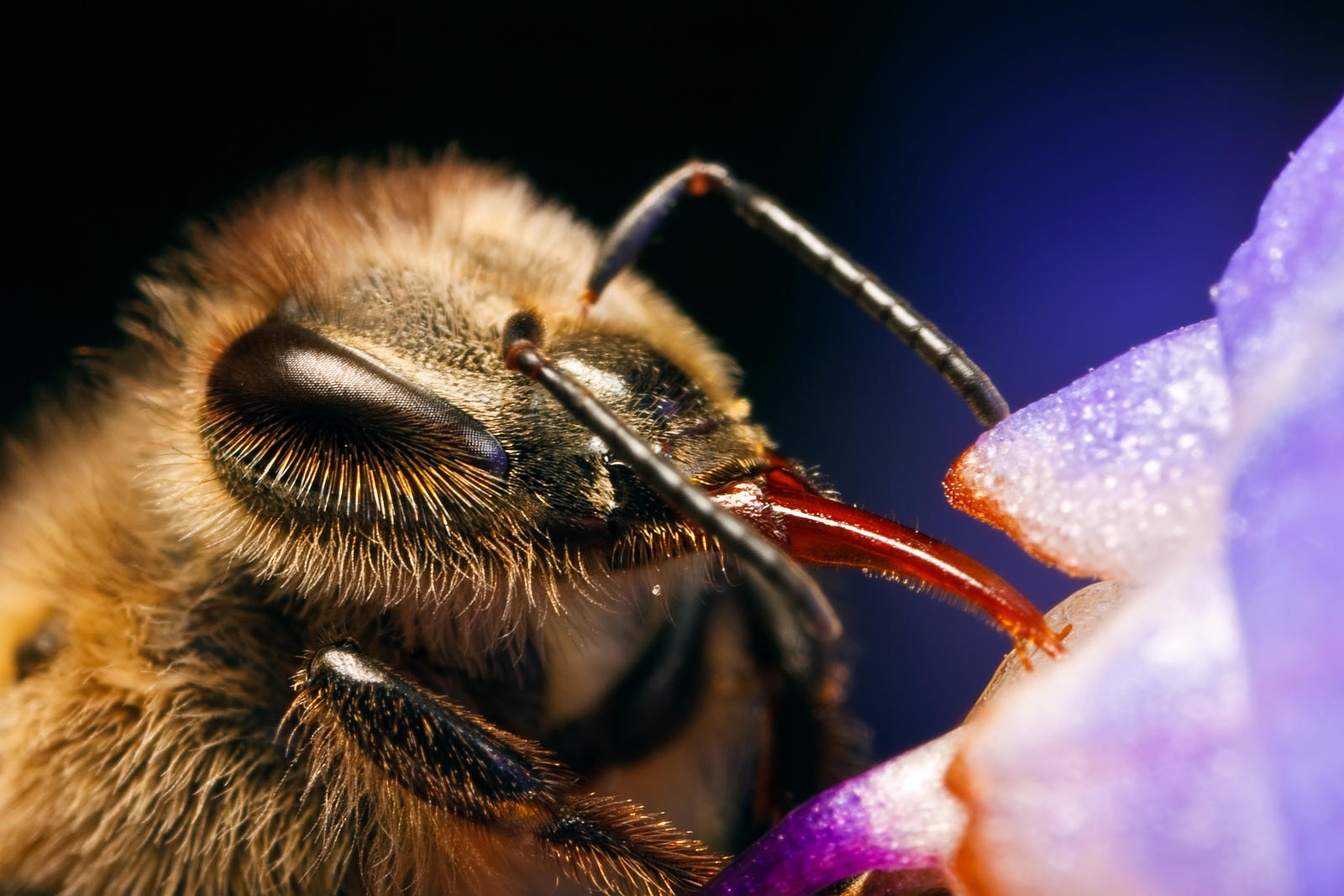
Well, flowers need pollination from honeybees to grow fruits, vegetables, and nuts. The way the flowers entice honeybees to pollinate them is by producing a sweet substance called nectar. The bees gather the nectar to turn into honey for their food. When a bee lands on a flower it will stick out its tongue (also called a proboscis). The proboscis is shaped like a straw and helps the honeybee suck up the nectar. 
Notice the bee's proboscis drinking the
nectar from the flower?

Photo: dalantech - deviant art

The nectar is then stored in a bucket inside their body called a honey sac. Honeybees can’t carry buckets like we can, so they store it in a special bucket inside their body. Inside the honey sac, the nectar is mixed with enzymes, special substances which give medicinal properties to honey. These enzymes add antibacterial, antimicrobial, and hygroscopic properties. That means honey is like nature’s Neosporin. Next time you get a cut or wound, put some honey on it and then a band-aid. The honey will clean the wound because of the cleansing properties and keep it moisturized and sealed to help it heal with as little scarring as possible. Many hospitals even use honey to help heal burns.

Honey stored in the honeycomb
Photo: Igor Dmitriey
While the honey is mixing with enzymes, the honeybee will fly home to her beehive. Inside the beehive the bee will deposit the honey from her honey sac into the honeycomb. The honeycomb is where baby bees are laid and born as well as the food (like honey) is stored. The bees will fan their wings over the nectar to dehydrate the honey (take some of the water out). Once some of the water is taken out, we have a thick, syrupy honey. The honeybees will put fresh beeswax over the honeycomb cells to make sure no dust or dirt comes in while the honey is stored until it is needed.

After all the hard work, the bees now have honey. Honey is their main food source, and they often have an excess amount of it. A beekeeper can then come in to take their extra honey they don’t need, so we can enjoy it too. Next time we enjoy honey drizzled on a biscuit or a honey smoothie, we should thank the hardworking honeybees.

Tuesday, December 1, 2015

Propolis: the Glue of the Hive


A honey bee with tree sap for propolis in her pollen baskets

I’d like to introduce you to one of the amazing products of the beehive--propolis! Propolis is sticky glue that bees make by collecting sap from the buds of trees, then mixing it with beeswax and some of their own special secretions to create a glue. The color and makeup of propolis changes from one part of the world to another, and even from beehive to beehive.  


Bees made this entrance smaller by filling it with propolis
Have you heard that beehives are cleaner than a hospital? That’s because bees like a clean home and because propolis is antibacterial, so it helps to stop disease and bacteria in a beehive!

With more than 180 different compounds, propolis is the hive's chemical weapon against harmful pathogens and diseases. Propolis is antibacterial, antimicrobial, anti-fungal, antiseptic, antiviral, and antibiotic. It helps kill all the bad bacteria and keeps the hive healthy.
Scraping propolis off of the propolis trap

Honey bees have many uses for propolis inside the hive. It’s used to coat the whole inside cavity of the hive, smooth out any rough surface, and seal up cracks or holes in the hive. They even use it to imprison small hive beetles (a beetle that likes to hang out in beehives and eat honey) and to embalm (cover) dead animals like a mouse that might happen to die inside the hive.

In ancient times propolis was used to treat wounds
It’s not just the bees who find propolis useful, it has been used by humans for a very long time! Beekeepers harvest propolis from their beehives by using a propolis trap. In ancient times, propolis was used for its medicinal properties in treating wounds and tumors to fight infections and promote healing. The Egyptians even used it to embalm mummies!


Propolis is just as effective today as it was back then, and it is still used for medical purposes for fighting infection, boosting the immune system, healing cold sores, treating skin injuries, and healing the mouth after dental surgery. It can also be found in beauty and skin care products, cough syrups, and healing ointments. Propolis is even used in agriculture to fight plant viruses in certain crops! 
 
Raw propolis from a beehive


Propolis is another incredible product from honey bees that is important to the beehive and useful to humans. You can find propolis and many propolis products online, at your local health food store, or from your local beekeeper.