Showing posts with label pheronomes. Show all posts

Monday, January 1, 2024

How Honey Bees Communicate

Honey bees communicate through various ways since they do not have ears. They use two different ways to communicate which are movement and odor. 

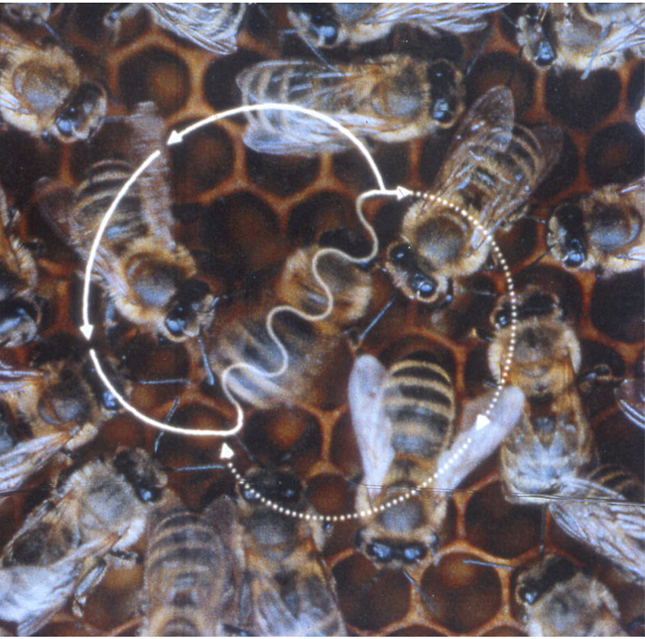
Honey bees have a “waggle” dance that they show to one another to tell each other the direction and distance of floral sources outside of the hive. Scout bees will point their body in the direction of the food source and will move her body and wings to produce a buzzing sound. This dance is a figure-eight pattern, with the smaller the figure-eight the closer the food is to home and the bigger the figure-eight the farther it is. 

The honey bee in the center is doing the waggle dance to tell other
honey bees where the food sources are outside of the hive.


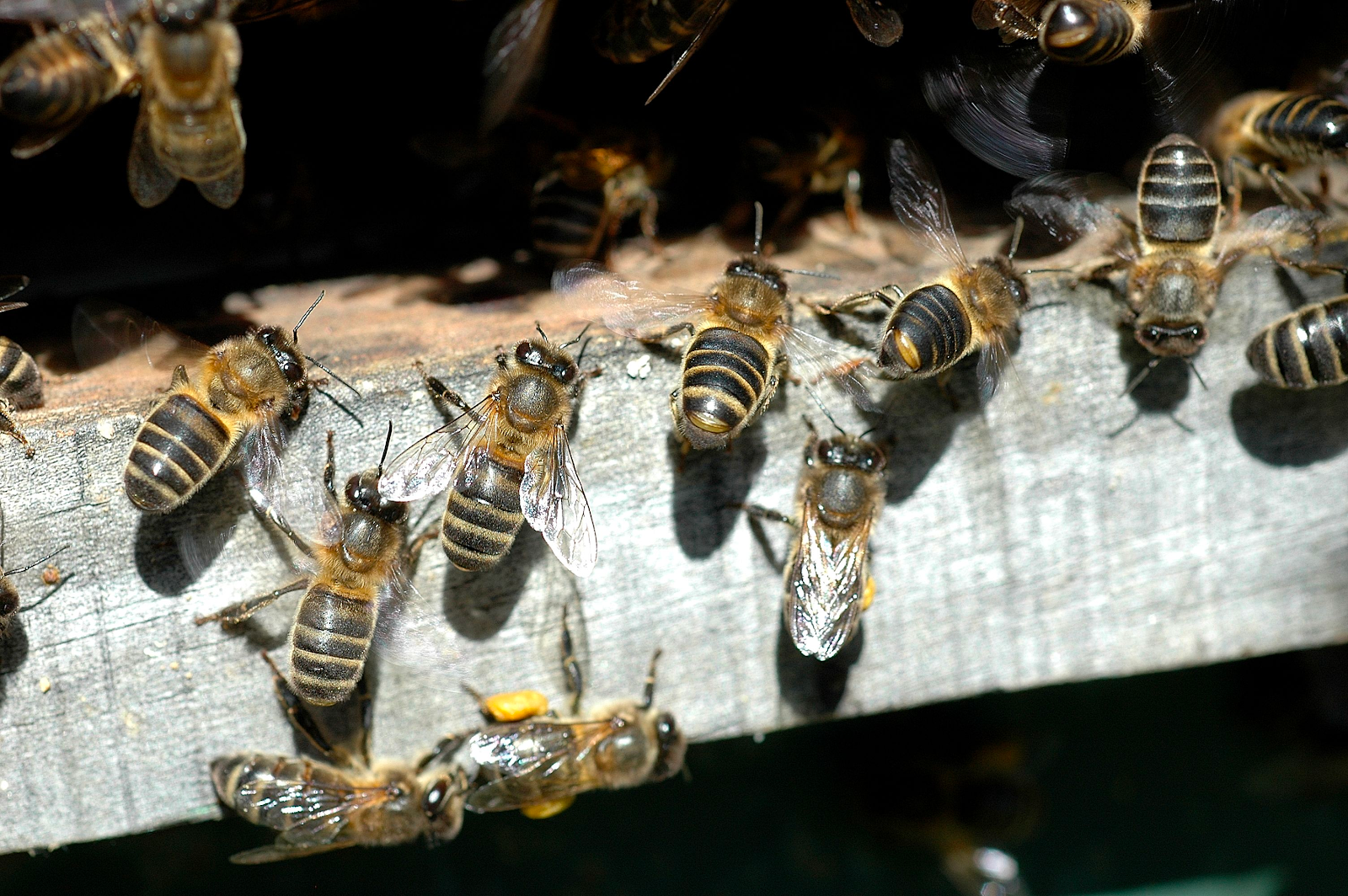
In addition to communicating through movement, honey bees also use odors. The queen honey bee lets off a special pheromone smell so that workers know where the queen is and that she is healthy. Bee stings also produces a pheromone that alerts other honey bees that there is a threat. They will also use alarm pheromones to tell other honey bees that they need help defend the hive from outside threats. Fun fact: the alarm pheromone is said to be similar in smell to bananas!

Honey bees also use pheromones to communicate important information, 
such as if there is a threat present.


Sunday, December 1, 2019

The Sting of a Honeybee

Most people have been stung by a bee in their lifetime, but the sting of a honeybee is a little bit different. When a honeybee stings, it also affects them as well as the individual stung. A honeybee doesn't like to sting. They will only sting to protect themselves or their hive because a honeybee can only sting once, and then it dies. If you look at the end of a honeybee stinger, it looks like the end of a fish-hook that is barbed. When the honeybee stings you, its stinger gets stuck in your skin because of those barbs. When the honeybee flies away, the stinger is still stuck in the skin of the human which causes the honeybee's stomach to rip apart, killing the honeybee.


If you ever get stung by a honeybee, the first reaction will be to pull the stinger out of your skin, but
don't pull it out! When the honeybee flew away, she left that stinger in your skin along with the venom sack. If you pull the stinger out, you will push more venom into your skin, causing a bigger swelling reaction. The best thing to do if you are stung by a honeybee is to use your fingernail and gently scrape the stinger out of your skin. A natural swelling reaction will occur with a honeybee sting so don't worry about swelling. The cause for concern will come if after a sting, you have trouble breathing or swelling of the airway. In a case like that, medical attention is necessary! As for a normal sting with some swelling, the swelling will go down in a couple of days. If you would like the swelling to be lessened, one thing you can do is to take baking soda and mix it with a little water, creating a toothpaste consistency. Put this on the area affected and the baking soda will help draw the venom out, lessening the swelling reaction.

Image result for using a smoker on honeybees
A lit Smoker
When a beekeeper goes to the hive, they may use some equipment that will help to minimize the amount of stings they receive. One piece of equipment a beekeeper will use is a bee-suit. The bee-suit will cover the beekeeper from head to toe and prevent the honeybees from from having direct contact with a beekeeper's skin. Another piece of equipment the beekeeper will use is a smoker. A smoker is basically a tin can the beekeeper will build a campfire in and then use to smoke the bees. The smoker doesn't hurt the bees at all but instead calms them down by masking their form of communication. Honeybees communicate through smells. When they get alarmed, they release the alarm pheromone that smells like bananas. This is signalling to all the other bees that there is something attacking the hive and they need to fight. This is where the smoker comes into play. The smoke will mask those pheromones and help the bees to remain calm while the beekeeper checks on them.

Sunday, February 1, 2015

The Busy Life of a Worker Bee

Have you ever wondered what it would be like to be a bee inside a hive? Well, for the female worker bees, it is pretty busy! Just like there are many different jobs that people do in our world today, there are different jobs worker bees do in their hive. From the day they are born until the moment they die, they really are “busy little bees” working to build and better their beehive. Each worker has five main jobs she completes in her lifetime of 3-5 weeks, and she instinctively knows when it’s time to switch to each job.  

A newly hatched worker bee


1. Housekeeping 
Her work begins right after she hatches out of her cell. She turns around and begins cleaning out her cell, preparing it for the queen to lay a new egg. As a housekeeping bee, she will continue to clean the hive, taking out anything that does not belong inside the beehive.  


A nurse bee feeding baby bee larvae

2. Nurse
Her job as a nurse bee begins when she develops special glands in her head that help her make food for the queen and baby bees. These glands are called hypopharyngeal glands and produce a milky-white substance called royal jelly. As a nurse bee, she helps feed and care for the young larvae or baby bees and gets to serve in the queen’s court where she cares for and feeds the queen bee.


3. Wax

Her next job as a worker bee requires her to make beeswax to build new cells and repair old cells. How does she make the wax? When she eats honey, her body produces wax from eight wax glands located on her abdomen. The wax flakes off, and she forms it into the perfect hexagon shapes you see in honeycomb. She will also store nectar and pollen that other worker bees bring into the hive by packing it into the wax cells.


Worker bees guarding the entrance of their hive 
4. Guard

As a guard bee, a worker bee will stay at the entrance of the hive, defending it from any invaders such as wasps or predators like skunks. Honey bees easily recognize bees from their own hive by scent and will chase away any bee not from their hive. Guard bees release an alarm pheromone to warn their hive when there is an intruder. Pheromones are scents (much like perfume) that the bees release from their bodies to communicate with each other. The guards also help cool the hive down when it gets hot by fanning their wings to move air throughout the hive.

5. Forager

A worker's last job as a foraging bee is when she finally gets to leave the hive and fly out to gather food and supplies. She will work from sunup to sundown visiting flowers to gather nectar and pollen. Did you know that honey bees actually collect more than just nectar and pollen? They also collect water to help cool the hive if it’s hot and tree sap to make propolis, which is sticky bee glue. 


A worker bee collects nectar and pollen from flowers
In between jobs, worker bees may also serve the hive by helping with various tasks, such as removing dead bees from the hive, making propolis and applying it in the hive, and fanning nectar to evaporate water from it. 


Worker honey bees are very committed to their different jobs, working until their wings are so torn they can no longer fly. The jobs performed by each bee may be small, but by working together and contributing their part, honey bees can have a strong and healthy hive.

Thursday, January 1, 2015

Bee Sense

Have you ever wondered what the world would look like if you were an insect? In your everyday life, you use your five senses (taste, touch, hearing, smell and sight) to learn about the world around you. An insect’s body works differently from yours and that changes the way they learn about the world around them.

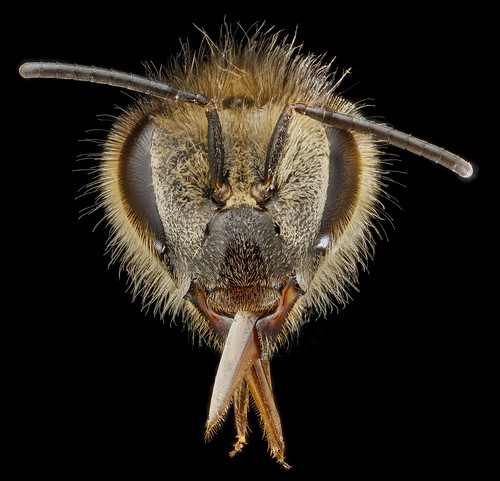
Front view of a proboscis 


Taste: A bee’s sense of taste depends on receptors in her antennae. She can tell the difference between bitter, sweet, salty, and sour. If she likes the taste, she will extend her proboscis and begin to feed.

Touch: A bee’s sense of touch is similar to a human. They often use their antennae to measure cells and also touch each other during bee dances.

Hearing: Although most insects do not have ears to hear, they are able to “hear” sound around them because of the vibrations in the air. A bee is covered in very sensitive hairs which alert her to vibrations in the air. Worker bees can “hear” a scout bee buzzing as she tells them where food can be found.

A honey bee releasing pheromones to guide other bees home


Smell: Honeybees use chemical smells called pheromones to communicate with each other and identify bees that belong in their hive. A honeybee does not have a nose; instead, she uses special receptors in her antenna to decipher what pheromones are around her.   


Sight: Unlike humans, honeybees 
Comparison of human and bee visible light
have compound eyes with thousands of individual light receptors. This means that instead of seeing the world as one picture, bees see many individual dots of color placed together. It is similar to the way a television screen projects a picture. A honeybee’s compound eyes also see a different color range than humans, making it difficult to see red but allowing them to see ultraviolet light. A honeybee also has three additional simple eyes located on the top of her head. A bee cannot use these simple eyes, called ocelli, to see color. They can only see the difference between dark and light with these eyes which helps bees navigate.

Bees are amazing insects with very intricate bodies. They perceive the world differently than we do and use their senses to keep their hive happy and healthy.


Saturday, November 1, 2014

Bee Beards

What would you think if you saw a beard made out of live bees? Maybe you have seen a beekeeper do a bee beard at a festival, fair, or other event or you might have seen photos or videos of one. Have you ever wondered how a bee beard works?

Ready to wear some bees!
Bee beards are an amazing sight and a wonderful demonstration of how gentle our honeybees truly are. Bee beards also show us just how important the queen’s pheromones are to the hive, since it is her smell which causes the bees to cluster on the beekeepers face to form the bee beard.
First, a box of bees is prepared as an artificial swarm with the queen contained in a small screened cage. The person who will be wearing the beard is prepared by ensuring any jewelry or hair that would get in the way is contained and that he/she is not wearing any scents which would bother the bees.

Next, the queen cage is tied underneath the chin so that the bees will be able to smell her pheromones through the screen. A box full of worker bees is then shaken out onto a tray or barber cape worn by the person wearing the beard.  

Because the worker bees can smell the queen in the cage, they all climb up and cluster around her and form the beard of bees.
The bees beginning to cluster
Forming a fuller beard 

To remove the bee beard, the queen cage is taken off and then the rest of the bees are removed when the person wearing the beard jumps up and shakes the bees back into their box.


Wearing a bee beard feels electric! It feels funny because of all of the legs clinging to your face and the bees produce a lot of heat. It’s very neat to see how quickly the bees react to the queen pheromone and how gentle they remain throughout the whole process. Wearing a bee beard is an amazing experience and a lot of fun! 

Tuesday, March 5, 2013

Creative Communication!

Communication is important in all relationships. Humans communicate with one another on a regular basis to share information and thoughts. This communication is important in helping people bond with one another. Some forms of communication include speech, sign language, body language, and facial expressions. Did you know that honey bees communicate with each other as well? Honey bees live in large colonies, with an average of 40,000 to 60,000 bees in each hive – you can imagine how important communication is in such a large family!


The Path of a Waggle Dance
Honey bees use several different means of communication, with the most popular being dancing. Honey bees perform a specific dance in order to share the location of a food supply with the other bees in colony so that they, too, can gather food from that area. To perform the dance, a bee will walk forward, waggling her body from side to side. Then, she walks normally in a half circle and starts on the path again, waggling her body. The distance forward that the bee walks, the speed of her waggling, and the direction she is facing provide incredibly accurate directions to the other bees, who then go and collect the food. The directions are based off of the location of the sun, which the bees can sense even inside the dark hive.


Bees release pheromones to communicate important information, such as
if the queen is present in the hive or if there are intruders in the hive. The
other bees respond appropriately to the messages from these pheromones.
Another form of communication is the release of pheromones. Pheromones are distinct smells that the bees release to convey messages. The queen releases a special pheromone that helps the bees sense that she is in the hive and healthy. Worker bees also release pheromones. Guard bees, who protect the beehive from intruders, release a special alarm pheromone whenever there is an invader. This pheromone smells like ripe bananas!

Just as people communicate in different ways, so do honey bees. Communication allows the members of the colony to bond and to help one another, making the entire hive stronger. Communication - whether through speech, sign language, dancing, or pheromones – plays an important role in daily life. How do you communicate?

To see a bee perform a waggle dance, visit: http://www.youtube.com/watch?v=1lhVBNQ-Ik8