
Have you ever wondered how honeybees make honey?
Well, flowers need pollination from honeybees to grow fruits,
vegetables, and nuts. The way the flowers entice honeybees to pollinate them is
by producing a sweet substance called nectar. The bees gather the nectar to turn
into honey for their food. When a bee lands on a flower it will stick out its
tongue (also called a proboscis).
The proboscis is shaped like a straw and helps the honeybee suck up the nectar.
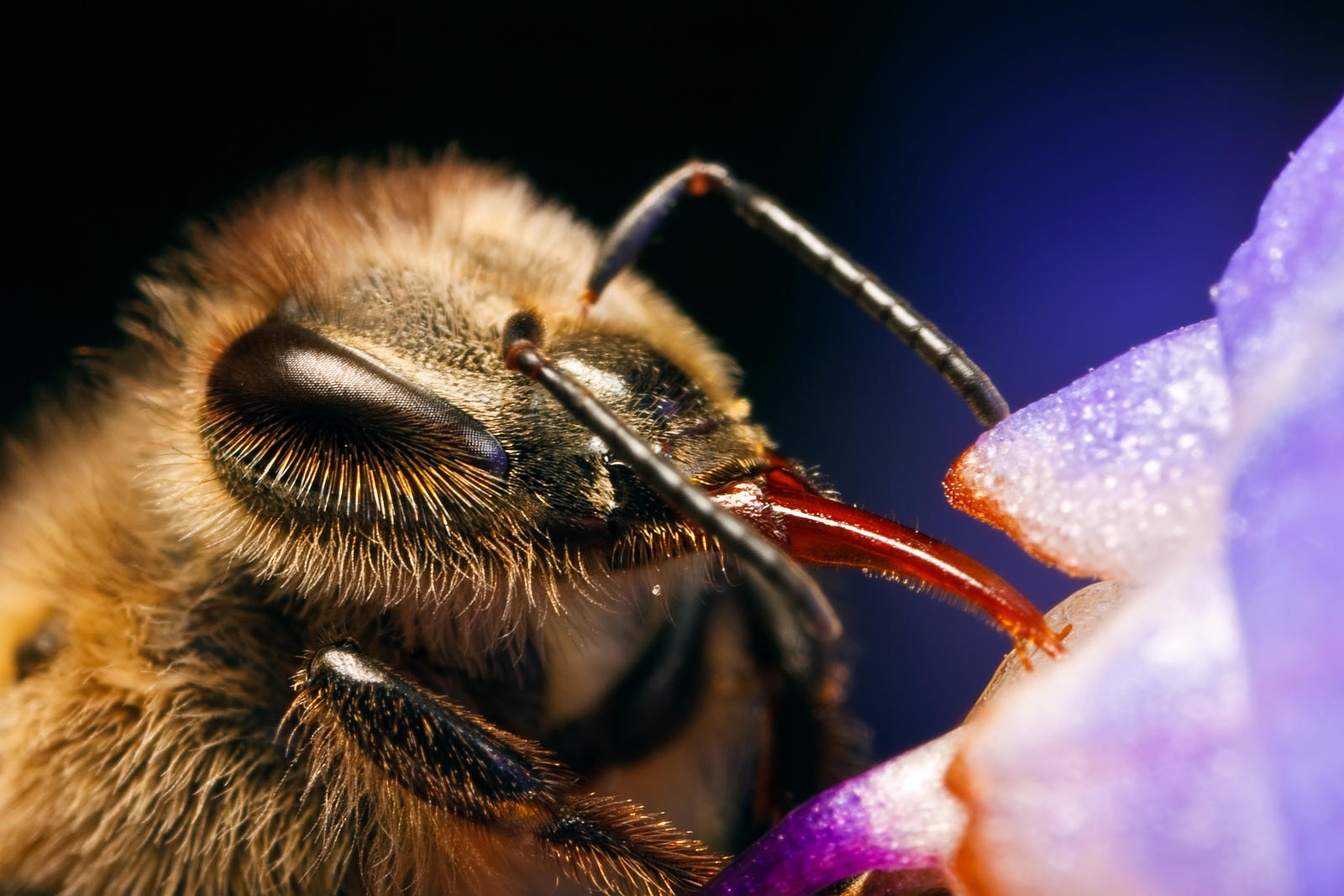 |
| Notice the bee's proboscis drinking the nectar from the flower? Photo: dalantech - deviant art |
The nectar is then stored in a bucket inside their body called a honey sac.
Honeybees can’t carry buckets like we can, so they store it in a special bucket
inside their body. Inside the honey sac, the nectar is mixed with enzymes,
special substances which give medicinal properties to honey. These enzymes add
antibacterial, antimicrobial, and hygroscopic properties. That means honey is like nature’s Neosporin. Next time you get a cut or wound, put some
honey on it and then a band-aid. The honey will clean the wound because of the cleansing
properties and keep it moisturized and sealed to help it heal with as little
scarring as possible. Many hospitals even use honey to help heal burns.
 |
| Honey stored in the honeycomb Photo: Igor Dmitriey |
While the honey is mixing with enzymes, the honeybee will
fly home to her beehive. Inside the beehive the bee will deposit the honey from
her honey sac into the honeycomb. The honeycomb is where baby bees are laid
and born as well as the food (like honey) is stored. The bees will fan their
wings over the nectar to dehydrate the honey (take some of the water out).
Once some of the water is taken out, we have a thick, syrupy honey. The
honeybees will put fresh beeswax over the honeycomb cells to make sure no dust
or dirt comes in while the honey is stored until it is needed.
After all the hard work, the bees now have honey. Honey is
their main food source, and they often have an excess amount of it. A beekeeper can then come in to take their extra honey they don’t need, so we can enjoy it
too. Next time we enjoy honey drizzled on a biscuit or a honey smoothie, we should thank the hardworking honeybees.


