Monday, January 1, 2024

How Honey Bees Communicate

Honey bees communicate through various ways since they do not have ears. They use two different ways to communicate which are movement and odor. 

Honey bees have a “waggle” dance that they show to one another to tell each other the direction and distance of floral sources outside of the hive. Scout bees will point their body in the direction of the food source and will move her body and wings to produce a buzzing sound. This dance is a figure-eight pattern, with the smaller the figure-eight the closer the food is to home and the bigger the figure-eight the farther it is. 
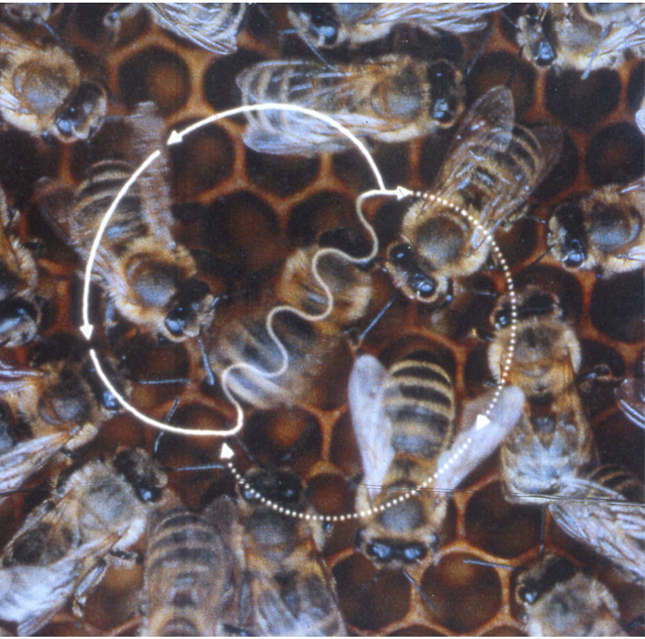
The honey bee in the center is doing the waggle dance to tell other
honey bees where the food sources are outside of the hive.


In addition to communicating through movement, honey bees also use odors. The queen honey bee lets off a special pheromone smell so that workers know where the queen is and that she is healthy. Bee stings also produces a pheromone that alerts other honey bees that there is a threat. They will also use alarm pheromones to tell other honey bees that they need help defend the hive from outside threats. Fun fact: the alarm pheromone is said to be similar in smell to bananas!
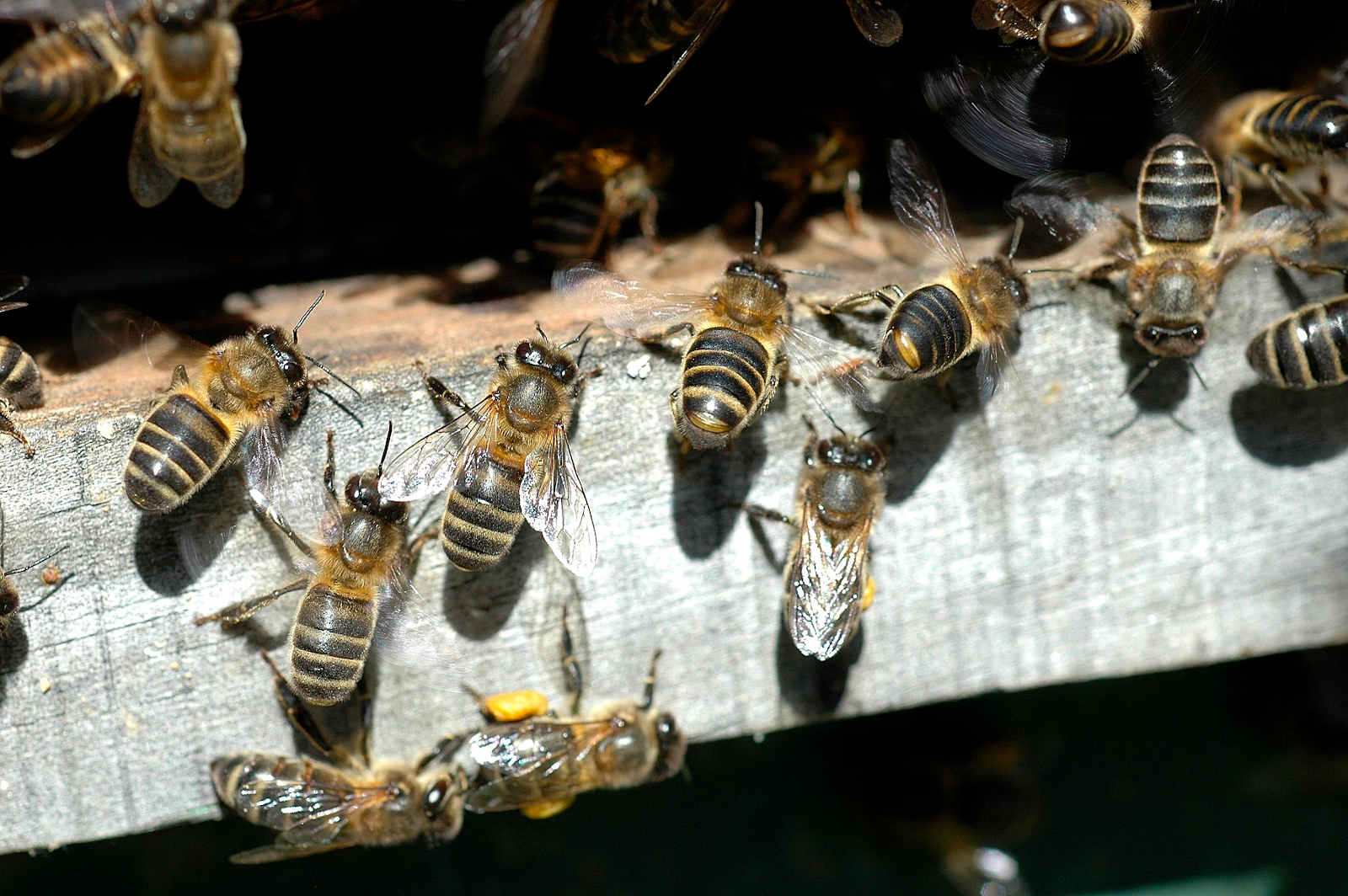
Honey bees also use pheromones to communicate important information, 
such as if there is a threat present.


Honey Rhubarb Ice Cream

 Honey Rhubarb Ice Cream

  • 3 cups rhubarb, sliced
  • juice of 1/2 lemon
  • 1/2 teaspoon salt
  • 1/4 to 3/4 cups honey
  • 2 1/2 cups heavy whipping cream

 Cook the sliced rhubarb, lemon juice, and salt in sauce pan over medium heat, until the rhubarb is softened. Place the rhubarb mixture and the desired amount of honey into a blender and puree. Place the rhubarb and honey puree into the refrigerator to cool completely. Once the puree is completly cooled, pour the heavy whipping cream into a bowl and whip into whipped cream. Gently fold the puree into the whipped cream and then place the mixture into the freezer until fully frozen.

Friday, December 1, 2023

Honey Bee Holiday


As the Holiday season approaches, and snow starts to fall, honey bees embrace their Holiday by taking a break from collecting pollen and nectar from flowers. In the chilly weather, they choose to stay inside their hive and focus on two essential tasks: keeping warm and conserving energy. This way they will be strong and energized to visit flowers in spring time.

Honey bee hives during winter.

As we cozy up indoors with a fireplace or heater creating warmth during the winter, honey bees have to create their own heat to survive. By huddling together in a cluster, they generate heat through the vibration of their wing muscles. This clustering technique helps them maintain a cozy temperature inside the hive.

Honey bees clustering to keep warm.

During wintertime, honey bees rely on the honey reserves they had carefully stored within their hive weeks earlier before it got too cold to fly. It serves as their nourishment and ensures they have enough energy when the warmer days of spring arrive. While staying warm, all the honey bees, including the worker bees, are resting to conserve energy. After almost a year of their busy activities, the honey bees take a well-deserved “stay-cation” in preparation for the upcoming spring season.


Wednesday, November 1, 2023

Bee-Thankful Kid Friendly Recipes

Thanksgiving is right around the corner, and why not celebrate with some easy recipes that use delicious honey! Below are some great recipes to try to show your appreciation for all the hard work honey bees provide for us.


Honey Peanut Butter Yogurt Dip from Sioux Honey

Instructions: 
  • 2 tablespoons honey
  • 1/4 cup plain Greek yogurt
  • 1/4 cup peanut butter
Directions:
  • Combine and stir all ingredients in a small bowl until smooth.
  • Serve with fruit, pretzels, or any other food that you want! 


Energy Balls
from 2023 American Honey Princess

Ingredients:
  • 1 cup oats
  • 1/2 cup chocolate chips
  • 1/2 cup flax seeds
  • 1/2 cup peanut butter
  • 1/3 cup honey
  • 1 tsp vanilla extract
Directions: combine all ingredients and form into a ball


Honey Turkey Rollers from National Honey Board

Ingredients:
  • 8 oz. cream cheese, softened
  • 1/3 cup honey
  • 1/4 cup mustard
  • 1/2 tsp onion powder (optional)
  • 6 (8-inch) whole wheat tortillas
  • 1 cup colby jack cheese, shredded
  • 12 thin slices turkey
Directions:
  • In a medium bowl, beat cream cheese with an electric mixer until fluffy. Add honey, mustard and onion powder; mix well.
  • Spread 1 to 2 tablespoons of honey cream cheese mixture out to the edge of each tortilla.
  • Sprinkle each tortilla with cheese, leaving about 1 inch around the edge.
  • Place 2 slices of turkey on each tortilla.
  • Roll up each tortilla tightly and wrap in plastic wrap.
  • Chill at least 30 minutes, then slice each tortilla log into eight 1-inch rounds and serve.

Sunday, October 1, 2023

Don't BEE Scared

October is a month filled with festivities and a touch of fear, but honey bees outside their hive are nothing to be afraid of. While you're outdoors, enjoying the sight of flowers or sipping on sweet beverages, you might notice honey bees buzzing around. Don't panic! These foraging honey bees have one mission in mind—they're simply searching for food, not interested in bothering you.
 
Curious honey bee on a finger.

Nectar is a part of a healthy honey bee diet, and they drink and collect it from flowers. Honey bee's sense of smell is remarkable, around 50 times stronger than a dog’s. This ability enables them to detect the aroma of the sugary liquids from flowers or even your soda, drawing them from distances of up to 5 miles away.
Honey bee drinking honey from a hand.


Although they have a great sense of smell, the honey bees' vision has its limitations. They can perceive colors such as purples and blues from afar but need to be close to observe finer details. So, if a honey bee ever comes near you or lands on you, it's not an act of aggression—she simply mistook you for a flower. During such encounters, it's best to remain still and allow the honey bee to explore its surroundings. These gentle creatures pose no harm unless threatened. Attempting to swat them away may provoke them to defend themselves with a sting.

Curious honey bee in a hand.

Friday, September 1, 2023

Different Ways to Help Honey Bees

Honey bees are vital for the pollination of many of our fruits and vegetables. Making sure we are all doing our part in helping them survive and grow is very important. 

Honey bee population numbers in the United States have been decreasing over time until about 10 years ago, but the population numbers have remained fairly stable since then. However, there are several things we can do to help honey bee populations.

  1. Grow a bee friendly garden:
    • Planting garden flowers and native wildflowers are a great source of nectar for honey bees! Some key flowers to plant are bee balm, sunflowers, lavender, goldenrod, and many more! In addition, planting trees, such as maples or black cherries, provide many blooms that support honey bees.
  2. Avoid pesticides and herbicides
    • Using pesticides and herbicides can be harmful to honey bees and other pollinators. Not using pesticides and herbicides can help honey bees, but if they need to be applied make sure to not apply them when flowers are blooming and do it at dusk or dawn when honey bees are not foraging.
  3. Support beekeepers
    • Buying honey and related products can be a great way to support honey bees. Another way to support both beekeepers and honey bees is to contact a beekeeper if you see a honey bee swarm. Beekeepers can help provide a safer home for honey bee swarms, which helps everyone out in the end.
  4. Be an advocate for honey bees
    • Teach others the importance of honey bees and other pollinators and ways they can help. Not everyone understands that honey bees are the number one pollinator in the world and their survival and success is so important!

There are many other ways to help honey bees and other pollinators, but this is a great list to help you get started! Be sure to do your part in helping the survival of honey bees, as they are vital to the pollination of so many of our foods.

Calling a local beekeeper about honey bee swarms
is a great way to help out honey bee populations!


Tuesday, August 1, 2023

Home Sweet Home and The Beeswax Builders

             The houses we live in provide protection from weather and the outdoor elements as well as a safe place for us to sleep. In contrast, honey bees must put on their construction hats and build their own home. Once honey bees find a safe spot to build their home such as inside a tree or in a hive box, they start building their walls out of a special material called beeswax. These walls are not only their home but also a storage space for honey and other important things.

Honey bees storing honey in their hive made of beeswax.

Worker bees that are 6-7 days old develop their 8 wax glands within their abdomen. These glands allow them to produce and secrete beeswax in the form of fragile flakes. Next, the worker bees peel off these flakes and chew them using their mandibles. This allows them to stick the beeswax to a surface and mold it into their favorite shape with six sides-- the hexagon. Each individual hexagon is called a cell.  Hexagons are honey bees’ favorite shape because they use the least amount of beeswax to allow for the most amount of space inside each cell.  The hexagons collectively serve important purposes within the hive.

Worker bee producing beeswax flakes from her abdomen.
The shape of a hexagon has 6 sides.
                                         

This clever construction of hexagon cells made of beeswax allows the honey bees to store their precious foods such as nectar, honey, or pollen. Additionally, the queen bee lays a single egg in each of these cells around 2,000 times a day, ensuring the growth of the colony. The walls of a bee hive are super close together. They leave just enough space for one or three bees to fit in between. This special arrangement helps the honey bees control the temperature inside the hive easily. Ultimately, honey bees are very resourceful and are remarkable mathematicians, engineers, and scavengers!


Beeswax walls close together help honey bees regulate the temperature of the hive.