Saturday, July 1, 2023

How Honey Bee Pollination Works

If it weren’t for honey bees and other pollinators, we would lose out on a lot of food that we eat on a daily basis, such as apples, oranges, and almonds. In fact, ⅓ of the food crops we eat are dependent on pollination and 80% of the pollination is done by honey bees. 

Pollination of flowers and crops is accomplished by honey bees through a simple process. Honey bees land on flowers to primarily collect nectar to make into honey, but also collect pollen on the millions of hairs that they have. They then fly to other flowers of the same type and pollen is dropped off when the honey bees collect more nectar. This then pollinates the blooms so that fruits, vegetables, nuts, and seeds are able to grow into the food we eat. More specifically, the pollen from the anther of a flower sticks to honey bees which is then inadvertently carried to the stigma of the flower, which is shown in the picture below.

Honey bee pollination is done by carrying pollen from
the anther of one flower to the stigma of another flower.


Thursday, June 1, 2023

The Journey of Honey: from Flowers to your Kitchen

Have you ever wondered how that jar of honey ended up in your kitchen? Honey bees are the incredible creatures behind the making of honey, and their process is quite fascinating. Let's take a closer look!

To make honey, honey bees start with an important ingredient: nectar. Flowers produce nectar, and honey bees collect it and bring it back to their hive. Inside the hive, they store the nectar in hexagonal cells made of beeswax.

Honey bee collecting nectar from a flower.

Nectar in beeswax cells inside a honey bee hive.


Next comes a special step called "fanning." Honey bees fan their wings over the nectar-filled cells, creating a gentle breeze. This breeze helps to dry out the nectar. This drying process is what transforms the nectar into honey. When the nectar's moisture level drops below 18%, it officially becomes honey.

Once the honey is ready, the honey bees seal the cells with beeswax. This ensures that the honey is stored safely for a long time because honey has a low water content and a high sugar content, making it difficult for bacteria to grow. That's why honey never spoils as long as it remains sealed, just like the jar of honey in your kitchen.

Capped honey cells inside a honey bee hive.

When beekeepers harvest honey, they take frames filled with capped honey cells. They carefully scrape off the beeswax caps using a bread knife or an uncapping tool, revealing the honey inside. These frames are then placed in a machine called a honey extractor. The centrifuge spins the frames rapidly, and the honey is separated from the cells. It collects at the bottom of the machine and is drained into a bucket. Once in the bucket, it's ready to be bottled.

Beekeeper using a tool to scrape off beeswax cappings.


Honey frames in a honey extractor.

Did you know that there are more than 300 varieties of honey in the United States? The only difference between them is the flowers the honey bees choose to visit. Depending on where you live, you may have different honey varieties to choose from. For example, orange blossom honey, made from the nectar of orange blossoms on orange trees, is popular in Florida and California.

Honey is not only delicious but also precious. It takes the entire lifespan of 12 honey bees to produce just one teaspoon of honey. So when you enjoy honey, make sure to savor every drop and appreciate the hard work of those amazing honey bees.


Monday, May 1, 2023

Top Flowers & Plants Honey Bees Like

Honey bees collect nectar and pollen from the flowers and plants they visit. However, there are certain flowers and plants that they tend to visit more than others. Knowing which flowers and plants that better attract honey bees can allow you to plant the right ones in your garden. Each type of flower has a different blooming season, length of life, and how tall they are. Knowing these details allows to you pick the perfect ones based on your needs.

Some of the top flowers that honey bees like are:

Bee Balm

  • Blooms in the Spring, grows back every year, and grows to 1-4 feet tall.

Black-Eyed Susan
  •  Bloom in the Summer and Fall starting the 2nd year, grows back every year, and grow to be 1-3 feet tall.
Purple Coneflower
  •  Bloom in the Summer and Fall, grows back every year, and grows to 2-4 feet tall.
Sunflower
  •  Bloom in the Summer and Fall, only grow/live for one season, and can range in height from 1-15 feet tall.
Wrinkle-Leaf Goldenrod
  •  Blooms from late Summer to Fall, grows back every year, and is about 3-4 feet tall.


Saturday, April 1, 2023

The Inside Scoop on Beekeeping Tools


Happy Spring! As beekeepers are opening up their honeybee hives to prepare for another year of pollination and honey making, let's learn about the handy everyday tools that beekeepers use to check on their hives. Beekeepers across the United States utilize different methods of hive maintenance. Some of which have existed for centuries! There are a variety of ways to keep bees, but generally all beekeepers would agree that there are three vital tools required for going into a beehive. Let's explore the inside scoop on the essential tools of a beekeeper!

Hive Tool
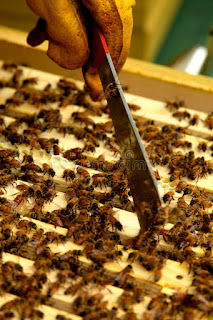
A hive tool is used to separate frames inside a honeybee hive.

Hive tools come in different styles. This is one of the most common.

            First, is one of the most essential tools, the hive tool. The name and current common designs of a hive tool have been utilized for at least a century, which demonstrates the desirability of its' multifunctional use across generations. The main reason beekeepers use a hive tool is because honeybees create a substance called propolis, made from tree resin and beeswax. Honeybees use this to seal up their hive to keep it safe from bad weather and pests. The hive tool allows beekeepers to pry open the hive's lid and separated the frames for inspection. The generic hive tool has other functions as well. Personally, I find new uses for it every day. It may be used as a hammer, a shovel, a nail remover, a crowbar, and of course, a hive beetle squasher. When the tool becomes coated in propolis, it is easy to clean by using another hive tool to scrape it off. Remarkably, this instrument is so useful that there are even travel-sized versions available for beekeeping on-the-go.

           Bee Veil or Suit

Beekeepers wearing a full-body bee suit which protects them from potential stings.

The next essential tool provides protection from stings. Some beekeepers use a cap and vail, which protects the face, along with long-sleeved and pants when working with a colony that they are familiar with. Other beekeepers wear a full body suit with thick layers of mesh that prevent bee stingers from reaching their skin. This is great for inspecting unfamiliar colonies. The downside to this full-body bee suit is that you could be mistaken for a giant marshmallow. However, during the hot summer, the hot weather may have you feeling more like a s'more in these bee suits. To complete the picture, all we need is a campfire, which brings us to the last tool of this inside scoop.

           Smoker
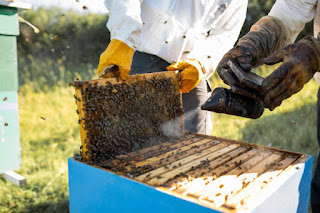
A smoker puffs smoke on the hive to mask alert pheromones.


          The smoker, or as I like to call it, the travel-sized campfire, is used to puff smoke onto the beehive to mask the alert pheromones (which smells like bananas) honeybees may produce when their hive is opened. This way they are more likely to behave calmly, allowing for an easier hive inspection. The smoker requires a flame and some fuel such as grass clippings, cotton, hay, pine needles, or other kinds of fuel that do the trick without harming the bees. It's very important that beekeepers ensure the smoke remains cool to prevent hurting the honeybee's wings. Once you're finished using the smoker, you'll need to scoop out the remaining fuel. Scooping out the remaining fuel can be challenging without the proper tool. That's where the hive tool also comes in handy, with its long, metal stick perfectly suited to the task. Ultimately, a beekeeper's toolkit would be incomplete without the hive tool, protective attire, and a smok
er.

Can you spot all three essential beekeeping tools mentioned earlier in the photo below?
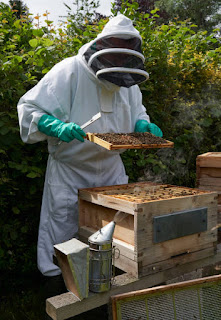
Spot the tools of a beekeeper! 


Wednesday, March 1, 2023

Benefits of Honey

Honey is a great food that both honey bees and humans consume. Honey bees collect pollen and nectar from flowers that they visit during pollination which they take back to their hive to turn into honey. Honey is primarily made up of sugars and water, with trace amounts of vitamins and minerals. Some of the key vitamins and minerals are: calcium, copper, iron, magnesium, manganese, phosphorus, potassium, zinc and more!

One way to use honey in addition to consuming it, is using it for wound care. Honey has been shown to speed up the process of wound healing, particularly burn wounds. 

Honey can also be used as a cough suppressant. This is because honey helps thin mucus and loosen coughs. Just taking two teaspoons of honey can help relive nighttime coughs for better sleep and more comfortability. 

Honey also can help various diseases by reducing heart risks, lowering memory loss, and even boosting one's mental health. In addition, honey contains antioxidants, which helps protect the body from inflammation. 


Monday, February 6, 2023

Will You BEE My Valentine?

The world around us is full of amazing relationships between living things that help each other to survive and thrive. One of the most special relationships is between honeybees, flowers, and humans. Honeybees and flowers have a symbiotic relationship, which means they depend on each other to survive and grow. Honeybees help pollinate the flowers by transferring pollen from one flower to another, which helps the flowers grow into fruit and vegetables. In return for pollination, the flowers provide food for the honeybees in the form of nectar, which they make into honey. The health of us humans is dependent on this relationship between honeybees and flowers because pollination is responsible for 1/3 of the food we eat. That is why beekeepers help facilitate this relationship by bringing thousands of honeybee colonies to plants that need pollination. 

Just like how honeybees and flowers help each other, we can also help others in our own way. On Valentine's Day, people often exchange gifts to show their love and appreciation for others. This is a great opportunity for you to think about how you can give to others, just like how the flowers give food to the bees and the bees give pollination to the flowers. For example, you can make a special card or craft for someone you love, give a helping hand to a neighbor or friend, or even donate to a charity that helps people in need. By giving to others, we can help make the world a better place, just like how the relationship between honeybees, flowers, and humans helps us all to thrive. So let's be like honeybees and flowers, and give to others whenever we can! 

Click here to learn how to craft a charming paper bee with this video below. It's a thoughtful gesture to show appreciation for someone special. You could even write a nice note on the back!

Sunday, January 8, 2023

2023 Representatives Crowned in Jacksonville

The new American Honey Queen and Princess were selected at the 80th Anniversary American Beekeeping Federation Convention in Jacksonville, Florida.

2023 American Honey Queen
Selena Rampolla from Florida

2023 American Honey Princess
Allison Hager from Iowa


Congratulations ladies! They will travel the United States promoting honey and beekeeping and post interesting articles about bees and honey along the way. Keep an eye out for the sweetest representatives in America!