Sunday, April 1, 2012

Honeybees and Easter

What are the first things that come to your mind when you think about the Easter holiday? Bunnies, baby chicks, egg dyeing, and of course many different candies… Do you think about honeybees? Many people don’t realize, but honeybees play a very important role in this special holiday because they produce beeswax.
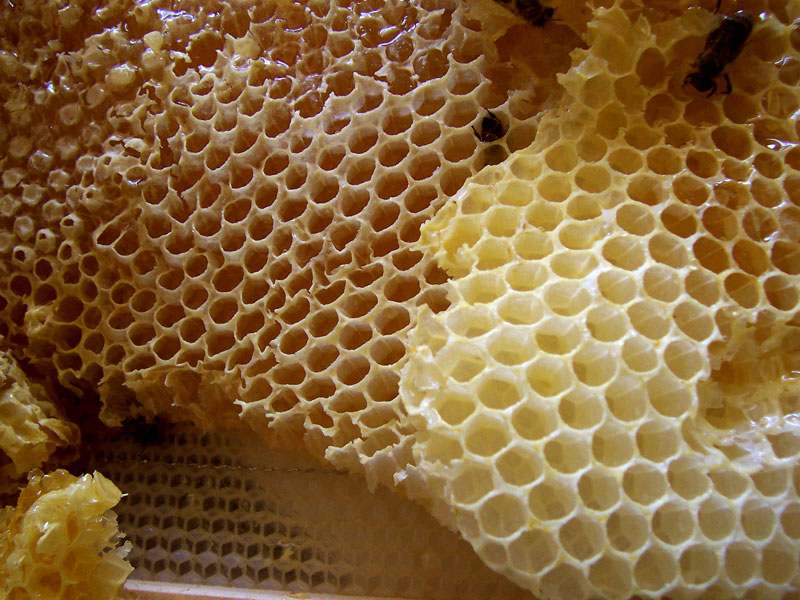
Natural honeycomb inside the hive.
Worker bees secrete beeswax from four paired glands on the underside of their bellies. Beeswax is used to build honeycomb inside of the hive, but beekeepers can harvest beeswax from the hive and use it in many different ways.
Paschal candles are 51% beeswax!

The most common use for beeswax is in candle-making. During the Easter season, the Catholic Church burns Paschal candles, which are special candles made with at least 51% beeswax. Beeswax burns brighter and with less smoke than other waxes, and the candles last for a longer time.

Decorating a pysanky egg.
If you enjoy dyeing Easter eggs, then maybe you would like to try decorating Ukrainian pysanky eggs. These eggs are dyed many times using beeswax which covers the egg in patterns on each layer. The result is a beautiful and elaborate brightly colored Easter egg.

Beeswax is also an important ingredient in many candies. Do you like jelly beans? Beeswax is sometimes added to the shell of jelly beans to keep them firm. Many chocolate candies have a coating that is made from beeswax. This gives the candy its shine and protects it from melting quickly.  But don't worry; you really can't taste it!
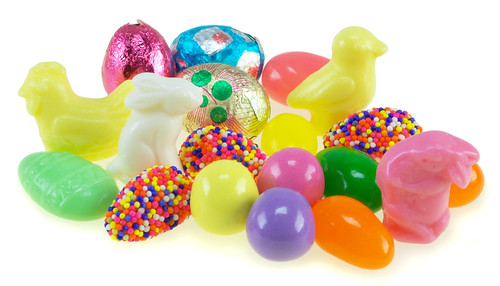
This upcoming Easter, as you decorate eggs and enjoy yummy candies, remember to thank the honeybee for her role in making your Easter celebration great!

Thursday, March 1, 2012

More bees, please!


          One common question that we get asked in schools is, “Where do you get your bees from?” With spring being just around the corner, beekeepers are starting to think about how many colonies or hives of bees they want this year. Beekeepers may want to get colonies for several reasons; he or she may be just starting this new hobby for the first time, getting more colonies to replace the ones that died over winter, or adding more hives to their operation.

            There are a few ways beekeepers can get more colonies of bees. They can try to catch a swarm of bees that may have left a different beekeeper’s hive or is living in the wild (this can be very difficult), beekeepers can buy hives from other beekeepers, or they can order packages of bees. Today we are going to talk about packages of bees.  

Beekeepers shaking a frame of bees into the funnel
that leads to the package. 
            In different parts of the United States there are beekeepers that raise package bees. Typically they live in warmer climates like California or Georgia. These beekeepers will take bees away from colonies that are “boiling over” with bees. In other words, the colonies are really healthy, and it would not hurt the colony to take bees away from it. The beekeeper will take frames that are covered with bees from these colonies and shake them into a type of funnel that leads into a package, and the package is on top of a scale. Here is a picture of a package: 


As you can see, it is similar to a wooden box with screened sides. The beekeeper will continue to shake bees into the package until it weighs 2 or 3 pounds. Each pound contains around 3500 bees.

A Queen bee inside of her separate cage. This will be put
inside the bigger package! 
            Once the package is the correct weight, a queen bee is put in the package, but she is kept in a separate cage that looks like this. She is kept in a cage so the other bees in the package get used to her and accept her as their new queen!

            The last thing that is added to the package is a can of sugar syrup. The bees have a long trip before they arrive at their new home, and they will eat the sugar syrup while traveling.

            Lastly, the bees are put on a semi-truck and are delivered to the beekeepers who ordered them. It’s just like when you receive a package in the mail, except the package buzzes a bit more!       

Wednesday, February 1, 2012

A New Year - A New Queen (And Princess!)

It’s a new year, and a new American Honey Queen and Princess have been chosen to represent the American Beekeeping Federation and travel across the country speaking about honeybees and beekeeping. A panel of judges makes the final decision, but have you ever wondered how a honeybee colony gets a new queen bee?

In our world, a person might be elected or chosen to become a queen, but in the world of the honeybee, a tiny egg is destined to develop into a queen from nearly the first day of its life. The queen bee has the very important job of laying all the eggs inside the hive. If a queen bee is growing old or if she suddenly dies, the worker bees must make a new queen in a hurry so there will be a queen in the hive to start laying eggs again.

To make a queen bee, workers select a few fertilized eggs and they begin to expand the size of their cells. These special queen cells are about the size and shape of peanut shells. The queen bee is the largest bee in the hive, and she needs plenty of room to develop and grow. As the egg grows into a larva, which looks like a fat, white worm, the worker bees start to feed the young larvae a special substance called royal jelly, which is produced from glands inside the workers’ mouths. Royal jelly is bee super food. It is very rich in calories, vitamins, and proteins. Every honeybee larva, including workers and drones,  eats a small amount of royal jelly during its development, but a larva that is going to be a queen bee needs a lot of it every day of her life. As the larvae eat the royal jelly, their bodies change and they develop into queen bees instead of regular worker bees. After 16 days, a brand new queen emerges.
A queen larva inside her cell. Do you see the royal jelly?

A queen cell is about the size and shape of a peanut shell.
For beekeepers, the next step is to use a special marker to paint a dot on the backs of new queens. They do this to make the queen easier to find inside of the hive, but also to show how old each queen is. As an industry standard, beekeepers around the world have a system, and they use 5 colors to mark their queen. Each color corresponds to a different year:

White
Years ending in 1 or 6
(Like 2011 or 2016)
Yellow
Years ending in 2 or 7
Red
Years ending in 3 or 8
Green
Years ending in 4 or 9
Blue
Years ending in 5 or 0

This queen is marked blue. What year was she born?
Beekeepers will use a yellow dot to mark all queens produced in 2012. What color would you be if you were a queen? Use the chart to find out! For example, if you were born in 2003, you would be marked with a red dot.

Wednesday, January 18, 2012

New American Honey Queen and Princess

At the American Beekeeping Federation convention in Las Vegas, Nevada, a new American Honey Queen and Princess were selected.  
American Honey Queen:  Alyssa Fine, Pennsylvania
American Honey Princess:  Danielle Dale, Wisconsin
They will be posting about their travels on behalf of the beekeeping industry.  Keep an eye out for new facts, beekeeping topics, and videos throughout the year.

American Honey Queen Alyssa and
American Honey Princess Danielle


Sunday, January 1, 2012

Beekeeping around the World

     The United States is just one of many places where there is beekeeping.  People in different parts of the world keep bees using a variety of techniques.  
A log hive like those used in Asia.

    
     In Asia, beekeepers use different types of bee hives. Log and box hives are two types used by beekeepers in most of Asia. A log hive is just what it sounds like, a log that can be opened on either end and has a hollow center that is large enough for a bee hive. Many beekeepers prefer this type of hive because it is inexpensive and can be kept almost anywhere. Box hives are also relatively inexpensive, but the main advantage of box hives is that beekeepers can open them to inspect their bees. This is important because as beekeepers, we want to make sure that our bees are healthy and that the queen is laying eggs.

Urban beekeeping in London.
     In Europe, urban beekeeping, which is beekeeping in cities, is a rapidly growing hobby for people who want fresh, local honey. The bee hives that are being kept in Paris produce an average of 110 pounds of honey per harvest! The hives in the country side produce an average of 30 pounds of honey per harvest. In other cities, such as London, urban beekeeping is growing.

A top bar hive, like those used in Africa, this one
has a window so you can watch the bees!
     In Africa, many beekeepers use top bar hives.  Top bar hives are a long hive with a removable top and frames. This type of hive is great for beekeepers who want to produce comb honey, which is honey that is still in the beeswax cells. This type of hive can also be made out of my different materials, so it is used in small villages that many not be able to get large logs for log hives.

     In the United States, there are many different types of beekeepers, such as urban beekeepers and commercial beekeepers that truck their bees across the country for pollination.

      But no matter what country the beekeepers live in, honey bees are used for pollination. They pollinate almost 1/3 of all of our food! So in 2012 remember to thank honey bees for pollinating our food.

Saturday, December 3, 2011

Celebrate Bees!


Winter is a special time for celebrating – why not celebrate bees, too? Here are a few ways you can enjoy honey bees and the good gifts they give us this season:

Beeswax makes beautiful candles!

1) Burn beeswax candles in your home to enjoy their sweet smell and pretty glow. Beeswax is highly prized for candle-making because it burns smokeless and dripless, and has a lovely fragrance. Beeswax candles make great gifts, by the way! 

2) ‘Tis the season for coughs and runny noses, too. Try a spoonful of honey to soothe and coat a sore throat or relieve a cough. Honey is an incredible medicine! If you end up with a minor cut, burn, or scrape this holiday season, use honey under your bandage to aid in healing – honey is antibacterial!

3) Looking for a honey bee-friendly gift? You can help the honey bees and brighten someone’s day at the same time:
      - A jar of honey makes a very sweet gift (find unique honey varietals here)
      - Honey isn’t just for eating – it’s a sweet treat for skin, too!  A family
        member, friend, or teacher would love a bottle of Lemon Drop Body Wash
        or jar of Lemon Drop Body Scrub to exfoliate and moisturize skin. Learn
        how to whip up these fun, easy recipes by watching the short videos!
      - Give the gift of bees – you and your family, school, or club could help a
        needy family by giving them a beehive!
      - Encourage someone to cook with honey – make up a jar of easy Honey Spice Oatmeal Cookie Mix!


Honey bees love asters and many other kinds of flowers -
which flowers will you plant for the honey bees next spring?
 4) Read a good bee book! Here are a few ideas:
- Beeing by Rosanne Daryl Thomas
- Beekeeping for Dummies by Howland Blackiston 
- Bees in America by Tammy Horn

5) Honey is yummy in all kinds of holiday dishes – how about Honey Hot Chocolate, Honey Turkey Rollers, or Peppermint Candy Crisps? Find these tasty recipes on the “Cooking with Honey” tab!


6) Too cold to go outside? Beeswax is lots of fun for crafting – make a beeswax origami boat that really floats!


Thank you, honey bees, for bringing us
almost 1/3 of our food!
7) Thinking of spring already? Plan a honey bee garden! Check out these lists (1, 2, and 3) of plants honey bees love and start gathering seeds.

 8) Above all, remember the importance of honey bee pollination: at Christmas dinner or another holiday feast, fill your plate, then scrape 1/3 of the food back off (even the tasty stuff). That’s just about what you’d have left if honey bees disappeared! Now “bee” thankful for the bees and replace the food onto your plate.   


Tuesday, November 1, 2011

Bee Thankful!

With Thanksgiving only a few weeks away, this is the time of year that we all think about what we are thankful for. We have so many things to be thankful for, but don’t forget to be thankful for honeybees, too!
“Bee” thankful to the honey bees for:
1.       The amazing food that we all enjoy on Thanksgiving. Pumpkin pie and cranberry sauce and many other foods that we enjoy need honey bees for pollination. So thank the honeybees for that extra slice of pie!

2.       Beeswax candles
Many people use special candles on Thanksgiving! Use beeswax candles to add a special glow to your room and a sweet honey sent.

3.       Clothes
Honeybees not only pollinate our food, but they also pollinate cotton! Which we use to make jeans, t-shirts, and socks.

4.       Honey
Last, and certainly not least, is the sweet treat that bees make, honey. I like dipping my ham in honey on Thanksgiving. Ask if you can get some honey to use on your ham or turkey, or maybe you want to try adding some honey to your pumpkin pie!