Showing posts with label tools. Show all posts

Saturday, June 1, 2024

Tools of a Beekeeper

Every job has tools that are used in special ways; beekeepers do too. These tools make it easier and safer for the beekeeper to do their work.

Beekeepers in full beekeeping suits.

One of these tools is the veil or helmet. The veil or helmet helps keep the beekeeper safe from possible honeybee stings in the head or neck. Even though honeybees don't want to sting, sometimes they do to protect their beehives. The veil is usually white or light in color because dark colors are more alarming and the same colors as other animals that like to take honey from the beehive. Some beekeepers will also wear a beekeeping suit or jacket and gloves for the same reasons as the veil is worn.


Different types of hive tools.

Another tool a beekeeper uses is the hive tool. It is used to open the beehive and to break some of the seals in the beehive. The hive tool is a piece of metal that has a sharp side and sometimes it also has a hook and the end. The honeybees seal their hive with propolis, a mixture of tree sap and pollen grains. It is really sticky and makes the beehive wind and waterproof. The propolis is the glue that the honeybees put in every crack of the hive. Beekeepers use a hive tool to pry open the hive boxes and remove frames. 
A beekeeper's smoker.

The last tool that most beekeepers use is the smoker. Smoke helps keeps the honeybees calm. When the beekeeper puffs the smoke into the beehive, the honeybees go and eat as much honey as they can. If their beehive was on fire, they would have energy to find a new place to live. The honeybees are distracted by eating the honey, so there are less honeybees flying around as the beekeeper takes care of the beehives.

Saturday, April 1, 2023

The Inside Scoop on Beekeeping Tools


Happy Spring! As beekeepers are opening up their honeybee hives to prepare for another year of pollination and honey making, let's learn about the handy everyday tools that beekeepers use to check on their hives. Beekeepers across the United States utilize different methods of hive maintenance. Some of which have existed for centuries! There are a variety of ways to keep bees, but generally all beekeepers would agree that there are three vital tools required for going into a beehive. Let's explore the inside scoop on the essential tools of a beekeeper!

Hive Tool
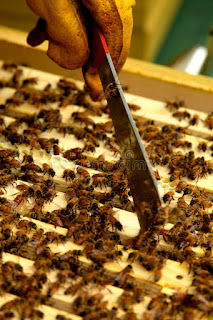
A hive tool is used to separate frames inside a honeybee hive.

Hive tools come in different styles. This is one of the most common.

            First, is one of the most essential tools, the hive tool. The name and current common designs of a hive tool have been utilized for at least a century, which demonstrates the desirability of its' multifunctional use across generations. The main reason beekeepers use a hive tool is because honeybees create a substance called propolis, made from tree resin and beeswax. Honeybees use this to seal up their hive to keep it safe from bad weather and pests. The hive tool allows beekeepers to pry open the hive's lid and separated the frames for inspection. The generic hive tool has other functions as well. Personally, I find new uses for it every day. It may be used as a hammer, a shovel, a nail remover, a crowbar, and of course, a hive beetle squasher. When the tool becomes coated in propolis, it is easy to clean by using another hive tool to scrape it off. Remarkably, this instrument is so useful that there are even travel-sized versions available for beekeeping on-the-go.

           Bee Veil or Suit

Beekeepers wearing a full-body bee suit which protects them from potential stings.

The next essential tool provides protection from stings. Some beekeepers use a cap and vail, which protects the face, along with long-sleeved and pants when working with a colony that they are familiar with. Other beekeepers wear a full body suit with thick layers of mesh that prevent bee stingers from reaching their skin. This is great for inspecting unfamiliar colonies. The downside to this full-body bee suit is that you could be mistaken for a giant marshmallow. However, during the hot summer, the hot weather may have you feeling more like a s'more in these bee suits. To complete the picture, all we need is a campfire, which brings us to the last tool of this inside scoop.

           Smoker
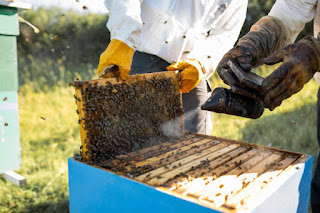
A smoker puffs smoke on the hive to mask alert pheromones.


          The smoker, or as I like to call it, the travel-sized campfire, is used to puff smoke onto the beehive to mask the alert pheromones (which smells like bananas) honeybees may produce when their hive is opened. This way they are more likely to behave calmly, allowing for an easier hive inspection. The smoker requires a flame and some fuel such as grass clippings, cotton, hay, pine needles, or other kinds of fuel that do the trick without harming the bees. It's very important that beekeepers ensure the smoke remains cool to prevent hurting the honeybee's wings. Once you're finished using the smoker, you'll need to scoop out the remaining fuel. Scooping out the remaining fuel can be challenging without the proper tool. That's where the hive tool also comes in handy, with its long, metal stick perfectly suited to the task. Ultimately, a beekeeper's toolkit would be incomplete without the hive tool, protective attire, and a smok
er.

Can you spot all three essential beekeeping tools mentioned earlier in the photo below?
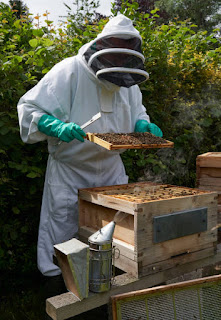
Spot the tools of a beekeeper! 


Monday, July 1, 2019

Three Tools of a Beekeeper

As beekeepers, we have three very important tools that make working our bees easier: the veil/suit, the smoker and the hive tool. When all the tools are used properly, you can work your bees and can do so without being stung. 


Before doing any job you always want to have the proper safety gear. In beekeeping, you always want to protect your face from being stung. With the veil, your entire head is covered and safe. Some beekeepers choose to have a full suit that covers their entire body so they are covered from head to toe. The veil is attached and only the hands and feet are exposed. This suit can come in a variety of materials such as nylon or cotton and can be a little heavy, but it’s great at protecting beekeepers from bee stings. There are also special gloves made of leather or thicker material that protect a beekeeper's hands. 

Beekeepers use a smoker to calm down the bees when they open the hive. A fire is started in the can using wood chips, leaves or sticks. Then, you pump the bellows to force smoke from the spout. The smoke masks the bees alarm pheromones and could simulate a fire response for them--filling their stomachs with honey to prepare to leave their "burning" home.

The hive tool is a mostly flat scraper made of steel. Beekeepers use the hive tool to separate the hive boxes and honey supers, loosen frames and scrape propolis and beeswax from boxes and frames. Honeybees secure their hive with these sticky substances and it would be very difficult to open the hive without your trusty hive tool.

Friday, April 1, 2016

Beekeeping Tools

Think of the special tools that are required for baseball players, chefs, construction workers or teachers. These tools equip them to be successful, make their job easier and, when coupled with their expertise, produce great results. Similarly, beekeepers have a set of tools that offer protection and allow them to take care of their bees properly. 

The most important protection tool is the bee suit. It is made up of three main pieces: the veil, jacket and gloves. The veil is to protect a beekeeper's face, nose, mouth, eyes and ears from bee stings. It looks like a hat or hood with netting covering the face. This netting helps the beekeeper see clearly while protecting his/her face. Although honeybees do not want to sting, sometimes it happens, and it's important for a beekeeper to protect him/herself. The jacket protects a beekeeper's torso. It is normally made out of light colored, heavy-duty cloth. Bee suits are made with light colored fabrics to keep the beekeeper cool while he/she is working the bees in the heat of the summer months. Also, beekeepers don't wear dark colors to avoid intimidating the bees by being mistaken for a honeybee predator like a bear. The third piece of the bee suit is the gloves that protect a beekeeper's hands. The gloves are made especially for beekeeping. The gloves are thick and long, reaching above a beekeeper's elbow. There is a thin piece of elastic that hugs the arm so a honeybee can't sneak in. The hand portion of the glove is made of leather. Bees typically can’t sting through the leather portion, so a beekeeper's hands are safe from stings while working the hive. 

The hive tool looks like a thin metal bar that bends at one end. This tool is used to open up the lid of the beehive and to move around the wooden frames inside. Bees use a sticky substances called propolis (tree sap) to ‘glue’ the inside of the hive together to help insulate their home. This keeps it warm in winter time and cool in the summer. The hive tool comes in handy to unstick that propolis so a beekeeper can open the lid of the hive and move frames to check on the bees.


Beekeepers use a smoker to calm the bees. When lighting a smoker, a beekeeper first opens the lid, fills it with wood chips, pine cravings or newspaper and lights this fuel to start a fire. Once there is a small fire in the barrel, he/she puffs the bellows to introduce a little oxygen to feed the fire. Then, the beekeeper packs more fuel in and waits for cool, billowy smoke to come from the barrel spout. The smoke needs to be cool so it will not hurt the bees. The beekeeper puffs the bellows to disperse smoke near the entrance to the hive and over the tops of the boxes. When bees smell smoke, they instinctively (automatically) start eating honey. Because the bees are busy eating food, their defenses are down while the beekeeper goes through the different frames in each box. Afterwards, the bees are full and content. Beekeepers use smokers to calm the bees, but it does not hurt them. 


Beekeeping tools are necessary for a beekeeper's protection and help make it easier to manage healthy hives.

Sunday, November 1, 2015

Tools of the Trade: Basic Beekeeping Tools

As with any other activity, there are special tools used when beekeeping. Many of the most common beekeeping tools are used for protection against honeybee stings. Honeybees are protective, not aggressive. They will only sting if they feel they must to protect their hive and their queen. However, when a beekeeper opens up a hive to work inside, the bees might think the beekeeper is trying to hurt them and respond aggressively. With the proper tools, beekeepers can work with bees with a minimal risk of being stung.


The first tool of beekeeping is proper clothing. Some beekeepers choose to wear a full bee suit that covers their entire body. This suit is made of a thick material the bees cannot sting through. The beekeepers might also choose to wear gloves so none of their skin is showing. The suits are often made of white material because bees are less aggressive towards lighter colors. The reason for this is thought to be that honeybees’ natural predators are often dark in color. Imagine a beekeeper in a black or brown bee suit. The bees might think a bear is coming to destroy their hive and become very upset. On the other hand, very few animals that harm honeybees are light in color, so the bees are not as concerned if a beekeeper in white works with the hive. Bee suits are a great tool because they fully cover the beekeeper. However, bee suits can be very hot to work in and/or restrict movement, which is why some beekeepers choose to only wear a veil instead. A veil is a special hat with netting around the face. The netting keeps the bees from being able to sting the beekeepers face. Honeybees are very busy on warm summer days, so often a veil is all that is needed for protection.


Another tool used by beekeepers is the smoker, which, as suggested by its name, is used to create smoke. The first purpose of the smoker is connected to honeybee pheromones. Pheromones are scents honeybees use to communicate with one another. One scent, called the alarm pheromone, is used by worker bees to tell other workers bees something is wrong and they need to defend the hive. The bees might choose to use this scent when they see the beekeeper open the hive. As more and more bees smell the alarm pheromone, they are more likely to defend the hive against the beekeeper. However, the smell of smoke made by the smoker is stronger than the smell of the alarm pheromone. If the beekeeper uses the smoker on the hive, they bees won’t be able to smell the alarm pheromone, and they will stay calm. The second purpose of the smoker is to make the bees think their hive is on fire. Researchers think when the bees smell the smoke they believe the hive is on fire and they will have to leave the hive. However, they don’t want to leave empty handed, so they fill their honey stomachs up with as much honey as they can hold. However, having full honey stomachs keeps them from being able to sting, so the beekeeper is safe. Once the beekeeper finishes working in the hive and stops using the smoke, the bees realize there isn’t a fire and put all the honey back in the cells. The smoker is very effective and does not harm the bees in any way.

One tool used that isn’t connected to the safety of the beekeeper is the hive tool. Hives tools are used for a variety of purposes. First, honeybees have a tendency to seal everything in the hive using wax and propolis. Hive tools can be used to scrap the wax away to tidy up the hive. Second, honeybee hives are full of frames, which are used to store honey. Beekeepers can use the hive tool as a level to pull out individual frames when needed. Third, hive tools can be used as a hammer on loose nails or staples in the hive. Creative beekeepers will use their hive tools for any number of tasks throughout the day including scraping paint off a wall or cutting open a taped up box. There is no limit to the uses of hive tools.

Successful beekeeping is possible without any of these special tools, but they certainly make the job easier. Imagine a house-painter working without a ladder or a carpenter without a hammer. These workers would still be able to do their jobs, but it would be much more difficult. In the same way, beekeepers’ jobs are made easier with bee suits, veils, smokers, and hive tools.