Showing posts with label beehive. Show all posts

Saturday, June 1, 2024

Tools of a Beekeeper

Every job has tools that are used in special ways; beekeepers do too. These tools make it easier and safer for the beekeeper to do their work.

Beekeepers in full beekeeping suits.

One of these tools is the veil or helmet. The veil or helmet helps keep the beekeeper safe from possible honeybee stings in the head or neck. Even though honeybees don't want to sting, sometimes they do to protect their beehives. The veil is usually white or light in color because dark colors are more alarming and the same colors as other animals that like to take honey from the beehive. Some beekeepers will also wear a beekeeping suit or jacket and gloves for the same reasons as the veil is worn.


Different types of hive tools.

Another tool a beekeeper uses is the hive tool. It is used to open the beehive and to break some of the seals in the beehive. The hive tool is a piece of metal that has a sharp side and sometimes it also has a hook and the end. The honeybees seal their hive with propolis, a mixture of tree sap and pollen grains. It is really sticky and makes the beehive wind and waterproof. The propolis is the glue that the honeybees put in every crack of the hive. Beekeepers use a hive tool to pry open the hive boxes and remove frames. 
A beekeeper's smoker.

The last tool that most beekeepers use is the smoker. Smoke helps keeps the honeybees calm. When the beekeeper puffs the smoke into the beehive, the honeybees go and eat as much honey as they can. If their beehive was on fire, they would have energy to find a new place to live. The honeybees are distracted by eating the honey, so there are less honeybees flying around as the beekeeper takes care of the beehives.

Monday, April 1, 2024

Honeybees Need Help Too

Honeybees do a lot to help us, but they need some help from us too.   

In the winter, honeybees eat food that the beekeepers leave in the beehive. By spring, the hive is usually getting low on food, so honeybees need to go visit flowers to collect pollen and nectar. The first flower that gives the honeybees lots of pollen and nectar is the dandelion. You can help honeybees by letting your grass get a little longer in the spring and letting the dandelions grow to give the honeybees food. Once dandelions are mostly white, honeybees can't get anymore food from the flower; then it is a good time to cut the grass. 


Planting flowers for honeybees to visit is another great way to help honeybees. Planting flowers that will boom at different times in the spring, summer, and fall make sure that they honeybees will have food all the time. 


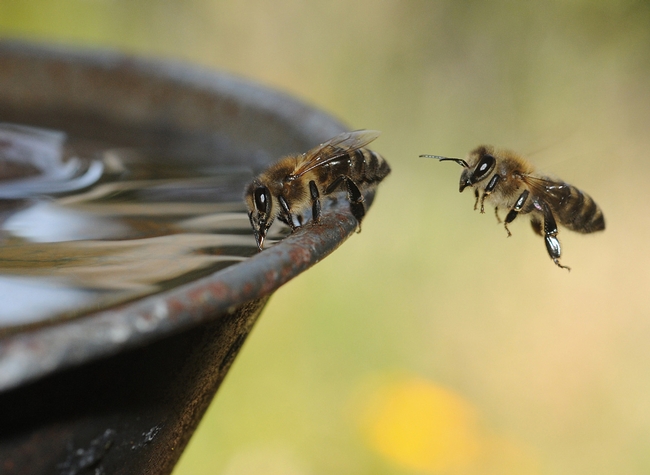
One hive of honeybees can go through a gallon of water every day. They have to collect that water to drink and to cool down the beehive. Honeybees cannot swim, so you can help them get the water they need by putting some stones in a bird bath. The stones give the honeybees a place to land and sit while they are collecting water. Other than helping the honeybees get food and water, there is another way you can help them. 


Leaving the honeybees that you see on flowers, in the air, and drinking water alone to do their work helps the honeybees. Honeybees do not want to sting you. They are working to make honey and food for the beehive. Don't swat at honeybees when you see them, and give them some space to keep working. These are all very easy ways you can help honeybees do their jobs!

Tuesday, August 1, 2023

Home Sweet Home and The Beeswax Builders

             The houses we live in provide protection from weather and the outdoor elements as well as a safe place for us to sleep. In contrast, honey bees must put on their construction hats and build their own home. Once honey bees find a safe spot to build their home such as inside a tree or in a hive box, they start building their walls out of a special material called beeswax. These walls are not only their home but also a storage space for honey and other important things.

Honey bees storing honey in their hive made of beeswax.

Worker bees that are 6-7 days old develop their 8 wax glands within their abdomen. These glands allow them to produce and secrete beeswax in the form of fragile flakes. Next, the worker bees peel off these flakes and chew them using their mandibles. This allows them to stick the beeswax to a surface and mold it into their favorite shape with six sides-- the hexagon. Each individual hexagon is called a cell.  Hexagons are honey bees’ favorite shape because they use the least amount of beeswax to allow for the most amount of space inside each cell.  The hexagons collectively serve important purposes within the hive.

Worker bee producing beeswax flakes from her abdomen.
The shape of a hexagon has 6 sides.
                                         

This clever construction of hexagon cells made of beeswax allows the honey bees to store their precious foods such as nectar, honey, or pollen. Additionally, the queen bee lays a single egg in each of these cells around 2,000 times a day, ensuring the growth of the colony. The walls of a bee hive are super close together. They leave just enough space for one or three bees to fit in between. This special arrangement helps the honey bees control the temperature inside the hive easily. Ultimately, honey bees are very resourceful and are remarkable mathematicians, engineers, and scavengers!


Beeswax walls close together help honey bees regulate the temperature of the hive.


Monday, March 1, 2021

School in the Honey Bees' Hive

Have you ever wondered what school would be like in the beehive?

Let me show you how honey bees use math, history, science, and biology to keep their home

organized and travel internationally!


Math 

To build the comb out of wax, honey bees eat about 8 pounds of honey in order to make 1 pound

of wax. The wax cells are in the shape of hexagons that have 6 sides. In these cells, bees can store

nectar, pollen, and brood. The brood are the baby bees that start as an egg and then grow into an adult. 

A queen bee can lay around 2,000 eggs each day! After 3 weeks, those eggs will emerge out of

their cells and join the workforce of the hive, cleaning the hive, feeding the brood, foraging of food, and many other jobs. Each year, 1 hive can produce about 50 pounds of honey. Each worker bee makes

1/12 of a teaspoon of honey in her entire lifetime! 

Science

Honey bees can smell flowers from a few miles away! One way that honey bees communicate is

through smells. In the hive, these smells are called pheromones. Honey bees detect different smells

that help them locate flowers, identify the age of a larva (~4-8 days old brood), and find open cells

of nectar. Worker bees will put the nectar into their honey stomach, add enzymes to it, and dehydrate it

and make the nectar into honey. To preserve the honey, worker bees will make a wax capping for the

cell of honey. Honey does not require any processing before eating, so you can buy comb honey

from many stores.


History

Since the beginning of time, honey bees and honey have been deeply ingrained into human culture. 

Honey bees are the only insect that produces food that humans can eat--honey! Humans have found

many uses for honey including beauty routines, wound care, and cooking with honey. Because of the

bees’ great benefit, the explorers brought beehives with them as they sailed across the ocean to find

new lands. In 1622, the pilgrims discovered the new world, which they later named America.

Whether it's making honey or pollinating flowers that grow into our fruits and veggies, honey bees

continue to serve an important role in our lives.


Biology

The biology of honey bees is different from that of humans. In order to breathe, honey bees have tiny

holes in their exoskeleton. According to Flow Hive, “These valves, called spiracles, are located on the

sides of their body."

Another feature of honey bees is their stinger. Worker bees have a barbed stinger so that they can

defend the colony from predators like bears, skunks, and mice. Since the queen bee’s only job is to

lay eggs, she has a smooth stinger to help establish herself as the only queen bee of the colony.

Since drone bees do not defend the hive, they do not have any stinger! 

Honey bees have 5 eyes: 2 compound eyes and 3 ocelli. The compound eyes allow the forager bee

to see the large grouping of flowers and the ocelli helps the bee see the details of the flower.

What kind of details can she see? Honey bees see the world in ultraviolet (UV) light spectrum,

which means that yellow and purple flowers are brighter and look more attractive to bees while red

flowers look black and unattractive. In the pictures below, the flower on the left is seen as normal

and the picture on the right is the same flower in UV light. Each flower species has its own pattern

under UV light. These patterns on the flowers are called nectar guides and help lead the bee to the

sweet nectar that she is foraging for. With the help of her eyes, honey bees can locate and pollinate

many plants.


Friday, May 3, 2019

Honeybees Throughout History

The buzz about honeybees has been around for thousands of years. Honeybees helped humans in Ancient Egypt, Greece and early America. Rock art shows "honey hunting" in early civilizations in Africa, India and Spain, and organized beekeeping happened in ancient Egypt, Greece, Italy and Israel. The greatest minds throughout history have studied the fascinating honeybee. 

Ancient Egyptians are thought of as the first beekeepers in history. Historians have found hieroglyphs of bees dating back to 2422 BD! The oldest jar of honey found in the world came from the tomb of King Tut. Ancient Egyptians knew that honey was more than just a food. They used honey to clean wounds and to promote beauty and youthfulness in cosmetics. They used bees wax to make candles. Today, people are still using honey and hive products for the same purposes! 

Some of the greatest ideas about honeybees came from Ancient Greece. Before this point in history, most ideas and observations were passed down through oral traditional and stories. The Greeks wrote down their knowledge. One of the most well known minds to study bees was Aristotle around 342 BC. He was not a beekeeper, but that did not stop him from studying bees. Some of his ideas were correct but some of them were not. He knew there were three bees in the hive. He got the worker and drone bees correct, but he thought the queen bee was a king bee! 

Early settlers in America brought honeybees from Europe to North America in 1622. There were native bees already in North America but the colonist introduced domesticated bees. In colonial times, bees were extremely beneficial. Honey was used instead of highly-taxed sugar and beeswax was used for making shoe polishes, lipsticks and candles. The beehives featured on early American coins convey how important honeybees are in our history.


Tuesday, May 1, 2018

Kid-Friendly Honey Recipes

Everyone loves a good honey recipe, but sometimes they're a little too hard to do on your own. I found some delicious recipes that are great for kids! Before starting, always have an adult in the kitchen with you, but let us know how you liked making these yummy spring honey recipes!
Honey Bear Lunchbox
YIELD:  Makes 1 serving
INGREDIENTS
1 1/2 tsp. - honey
2 slices - whole-grain bread
1 T- peanut butter
1/4- honey-crisp or granny smith apple, thinly sliced
Fresh berries and veggies for the lunchbox
DIRECTIONS
Place bread on a flat surface and spread peanut butter onto both slices of bread. Place apple slices onto one side, drizzle with honey and close sandwich.
Serve with freshly washed berries and veggies.

No-Bake Chocolate Honey Brownies
YIELD: Makes 16 servings
INGREDIENTS
1/2 cup - honey
1/4 cup - coconut oil
1/4 cup - almond butter
1/4 tsp. - sea salt
1 tsp.- vanilla extract
1 tsp.- ground cinnamon
1/2 cup - chopped almonds
1/2 cup - chopped walnuts
1/2 cup - semi-sweet chocolate chips
1/4 cup - sunflower seeds
1/4 cup - dried cranberries
1 cup - rolled oats
1 T- butter
DIRECTIONS
In a medium-sized saucepan, heat honey, coconut oil, almond butter, sea salt, vanilla and cinnamon over low heat.
Next, in a large bowl combine chopped almonds, chopped walnuts, semi-sweet chocolate chips, sunflower seeds, dried cranberries and rolled oats. Add the honey mixture from the saucepan into the bowl and mix.
Using your hands or a spatula, grease an 8" x 8" pan with the butter.
Press the brownie mixture into the pan and refrigerate until hardened. Cut into 16 bars and serve.
Recipe courtesy of Fitness Expert Bárbara Trujillo Gómez


Honey-Yogurt Popsicles
YIELD: Makes 8 servings
INGREDIENTS
2 cups - plain yogurt
1 cup - milk
1/3 cup - honey
1 tsp. - vanilla extract
1/4 lb. - cherries, pitted and quartered
1/4 cup - blueberries
DIRECTIONS
In a large bowl, stir together the yogurt, milk, honey and vanilla extract. Taste the mixture and add a little more honey if needed.
Divide half the fruit among 8 ½-cup popsicle holders.
Add ¼ cup of the yogurt mixture to each popsicle holder, then add the rest of the fruit. You'll need to press the fruit down a bit to distribute it evenly in the popsicle. Top off with more yogurt mixture if needed, leaving at least ¼ inch of space at the top of the popsicle holder because it will expand as it freezes.
Freeze the popsicles for several hours, until completely solid.

You can find more amazing kid-friendly honey recipes here.

Thursday, March 1, 2018

Honey is More Than a Sweet Treat!

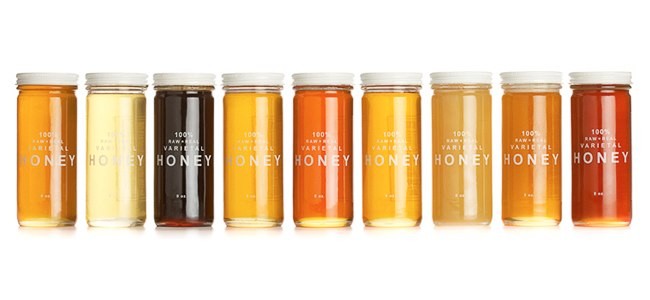
Honey is an amazing substance. It is a health-conscious sweetener, the only never-spoiling food, and is full of vitamins, minerals, and antioxidants. Honey comes in more than 3,000 varietals worldwide, depending on the nectar source from the honeybee! This causes each honey varietal to have a unique color, flavor, and chemical makeup. While most people know honey as a sweet food, many do not know about honey’s other uses.

Image result for honey varietals
Honey comes in over 3,000 varietals worldwide.
One of the most remarkable things about honey is that it is antibacterial. With Spring just around the corner, more and more folks are outside to enjoy the fresh season! However, between gardening, hiking, and other outdoor activities, there’s bound to be some scraped knees here and there. An incredible and natural way to care for minor wounds is honey! Some years ago, my dog Chuck ran away from home. When we finally caught up to him, he had a large cut on his paw. We took Chuck to the veterinarian, and after getting a number of stitches, she asked us to put honey on his wound. Because honey is only 17% water, bacteria cannot live in it. Additionally, honey is so viscous and thick that when it covers a wound it not only blocks bacteria from entering the wound, but it actually draws bacteria out. At the same time, it secretes a minute amount of hydrogen peroxide which actually promotes the healing process. Today, Chuck has minimal scarring and his paw is just fine. Honey works the same way on humans as it did on Chuck. Many hospitals now order honey in bulk for its medicinal purposes.
Chuck wearing a veterinarian- recommended honey cast for his wound.
Honey and other hive products are also often used in natural cosmetics. Being allergic to many artificial substances, I opt for all-natural cosmetic products, which typically feature honey. For example, the honey in my shampoo creates beautiful iridescent bubbles and develops a natural sheen to my hair because of its many vitamins and minerals.
Honey is truly a miracle substance. While many people only see honey as a delicious sweet treat, it is so much more than just a food!

Saturday, July 1, 2017

The Honeybee’s Life in the Hive

Have you ever wondered how the thousands of honeybees in a hive understand each other and know what to do during their lifetime? Each honeybee has a specific job, and they all know exactly what to do. There are three types of bees in a hive: the queen, the drone, and the worker bee. There are about 40,000 to 80,000 worker bees in the hive, about 1,000 drones and one queen. Let’s focus on the worker bee and what she does in the hive.

The worker bee is the smallest bee in the hive, and they are females. She is the one that you see outside, pollinating flowers as she collects nectar and pollen. The worker bee also does all of the work inside the hive. She begins with cleaning out the cell she emerged from, and then moves around the hive cleaning up any debris, extra wax, leaves, dead bees, etc. They are very clean insects!

After this, the worker bee becomes a nurse bee by feeding the larva “bee bread,” which is pollen and nectar mixed together. Then, she becomes a part of the queen’s court and helps take care of the queen bee. The queen is busy laying up to 2,000 eggs a day with no rest, so the worker bee feeds her and grooms her. Next, she will move out to the entrance of the hive box where she becomes a guard bee. In the event that something creates danger for the hive, she will let off a scent that is called the alarm pheromone and alert the other bees of the danger. 

In the summer time, it can get very hot with the sun shining on the hive all day. Honeybees keep their hive around 94° to help the larva and pupa grow strong and healthy. They stand in the front of the hive and fan their wings to make the air in the hive circulate and cool down the interior. During winter months, they will vibrate their bodies to warm the hive.

Worker bees have eight wax glands on their abdomen. After eating honey, they can draw the wax out of their wax glands in little flakes. They gather the wax with their mandibles and mix saliva into it to make it more pliable. They use wax to form cells for storage of eggs, pollen, nectar, and honey.

The last job that the worker bee has is foraging. She communicates with her sisters using a bee dance. She vibrates and moves around in little circles which tell the other bees where the flowers are located. Bees forage for four things: water, propolis, nectar, and pollen on flowers. Honeybees have two stomachs—one for eating and one to put the nectar into called a honey sac.  While the nectar is in the honey sac, she will add three types of enzymes into the nectar. These enzymes are what causes honey to never spoil. She then puts the nectar into a cell where she uses her wings to dehydrate it and thicken it into honey. Then, she caps over the cell full of honey with wax to keep it clean. Honeybees store plenty of honey for their food throughout the year, as well as plenty to share with humans.

I am very grateful for honeybees. They teach us many things about life.  Watching them do all of the many different jobs both inside and outside the hive is amazing. They know how to keep the hive running smoothly, they cooperate and communicate and work very hard. Each bee is needed, or the colony would not survive. Honeybees are amazing insects!

Monday, August 1, 2016

Honeybees Need Your Help

Here are five things you can do to help the honeybee.

1. Plant bee-friendly flowers in your yard
There are many flowers that bees really like and we call these ‘bee friendly flowers.’ Bees need flowers to survive. Flowers produce pollen and nectar. The bees collect the pollen to eat for themselves and to feed to their babies back home. Pollen is the bees source of protein, just like you and I need protein to grow healthy and strong, bees need protein as well. Nectar is the bees carbohydrates. Carbohydrates give the bees energy to do all of their many jobs. Honeybees also use the nectar to make honey! You can help provide the bees with food by planting flowers in pots or in your yard for the bees to come and collect pollen and nectar! 

Bees drinking water


2. Make sure the bees have plenty of water
Just like most creatures on earth, bees need water. Water helps to keep the bees hydrated. You can help the bees by creating a little spot for them to come and get clean water to drink. Pour water in a small bowl and add rocks or sticks to the water so there is a place for the bees to land so they don’t drown. Providing the bees with water is a great way to help!


3. Buy local honey
Local honey for sale
You can support beekeepers by buying local honey. Beekeepers work hard to keep their bees alive and healthy so that they can pollinate our food for us. Many times when the bees make honey, the beekeeper will sell that honey to make money to keep taking care of his/her bees. So you can help the honeybee by supporting and buying honey from a beekeeper in your area!

4. Become a beekeeper
Yes, you can be a beekeeper! Beekeepers are all different ages. So whether you are a young kid or a grown adult, you can start keeping bees. The first step to being a good beekeeper is learning as much as you can about honeybees. There are classes and books that will teach you all you need to know to start your own beehive. Starting your own bee hive is a very fun way to help honeybees! 
Kids who started beekeeping
5. Teach others what you know
Lastly you can teach your friends and family what you know about honeybees. You can teach them how important they are to our food supply and to our environment. You and your friends can plant flowers together, or make bee watering spots, or even enjoy eating honey snacks together all while helping the honeybee thrive. 

Honeybees are amazing creatures and they need your help!  

Sunday, May 1, 2016

Construction Zone: Building Up a Hive

Very new wax
Spring is the time of year when both beekeepers and honeybees are very busy! Once beekeepers install their package of bees in the hives, they generally give them a few weeks to get on their feet. The honeybees' first task is to start building comb. The honeycomb is made of wax that the bees secrete from glands on their abdomen. Each bee can only create a small flake of wax at a time; thus the entire colony must work together to build their comb. When wax is brand new, it is pure white, and then it darkens with age. First year wax will typically be yellow in color. The bees build the comb on top of the hexagon pattern that is molded into the foundation. This process is called "drawing out" the comb. 

New wax being built on black foundation
A closer look, showing orange pollen in cells
The queen will begin to lay her eggs in the drawn comb, one egg per cell. These eggs hatch out into larvae, which look like pearly white crescent shapes inside the cell. The larvae are fed by the worker bees. For beekeepers, seeing eggs and larvae in the hive is a good sign, because this means their queen is working hard and is still alive. After the larvae almost completely fill their cell, worker bees will seal off their cell with wax. This allows the larvae to pupate, or develop its head, thorax, abdomen, legs, and other features of its body. From the time an egg is laid until a new bee hatches from its cell is 21 days.


It is also important to watch worker bees returning to the hive. Do they have pollen in the baskets on their rear legs as they return? If we cannot see pollen on returning bees, we can take a look at the comb. Can we see cells that are filled with yellow or orange? This means the bees are bringing back pollen from flowers, which is a source of protein they will feed to the baby bees. Protein is what helps the baby bees grow big and strong.

With the queen laying up to 2,000 eggs per day and the worker bees bringing in pollen to feed to babies, beekeepers know that their honeybees are off to a great start for the year. They are building up their population to ensure that there are plenty of bees to collect nectar to make into honey throughout the summer.
Comb full of large larvae
 

Thursday, October 1, 2015

The Swarming Nature of Honey Bees


A swarm of honey bees

Have you ever seen a swarm of bees and wondered what they were doing? Swarms play an important part in the life of a honeybee hive.

Imagine you are a fuzzy little honeybee. You live and work in a beehive with around 60,000 sisters. That’s a lot of siblings! The hive is growing, the queen is laying eggs, and you’re all working hard to make honey. Then one day, you start to run out of room! There’s not enough room to store honey or for the queen to lay more eggs, and there’s not enough room for all of your siblings to fit inside the hive. What are you going to do? Swarm. That’s what beehives do when they run out of room. Half the hive leaves with the queen to start a new home. 

A queen cell with a new queen bee being raised

Before the swarm, you and your siblings start preparing for a new queen bee that will reign when the old queen swarms. A few days before the new queen hatches, it’s time to say goodbye to 30,000 (or half) of your siblings and get ready for your trip. Before you leave, each of you will eat as much honey as you can hold, which makes you kind of slow and not able to sting since you’re SO full. You will need that honey to make beeswax for your new home. Now you’re ready to leave. 

A swarm flying around before they gather on a tree branch

The scout bees give the signal and half of you fly out of your hive, surrounding the queen to protect her. You all circle in the air until the scouts find a good branch on a nearby tree where you gather in a big ball, continuing to surround the queen. It’s almost night time now, and soon it will be too dark to fly. You decide to spend the night on the branch. In the morning, as soon as the sun comes up, the scout bees head out to look for a new home. After a little while, the scouts return and begin excitedly doing special dances to tell everyone that they found a new home! All the bees take flight with the scouts leading the way to your new home. Your new home may be in a hollow tree, an abandoned corner of a barn, or in a beekeepers empty beehive box. 
A beekeeper shakes the swarm into a beehive box

Now, you and your siblings work together collecting nectar and building comb so the queen can lay eggs. Your hive may be small right now, but someday, when this new home is full and buzzing with lots of bees and busyness, it will be time to start the swarm process all over again. But for now, you all work together to build a strong and healthy hive.

The hive is happy in their new home


Now you know what a swarm is! Just remember, you don’t have to be afraid of a swarm, because the bees are so full of honey that they can’t really sting, and they have no home to protect. You should still leave the swarm alone and stay a safe distance away. If you ever see a swarm, leave it be or call a beekeeper. You never want to kill a swarm. A beekeeper can put the bees in an empty hive box where they will start a new home and have a healthy hive.