Showing posts with label flowers. Show all posts

Tuesday, April 1, 2025

Spring Food for Honeybees

The spring season is quickly approaching, and with that we will soon hear the chirping of birds and the buzz of honeybees. With the weather warming, and sometimes being unpredictable, this is the perfect time to take up a new hobby of gardening while supporting our buzzing friends. 

If you are planning on supporting honeybee populations, while also taking in the beautiful sunshine, consider planting the list of plants below to ensure the honeybees have something to eat!

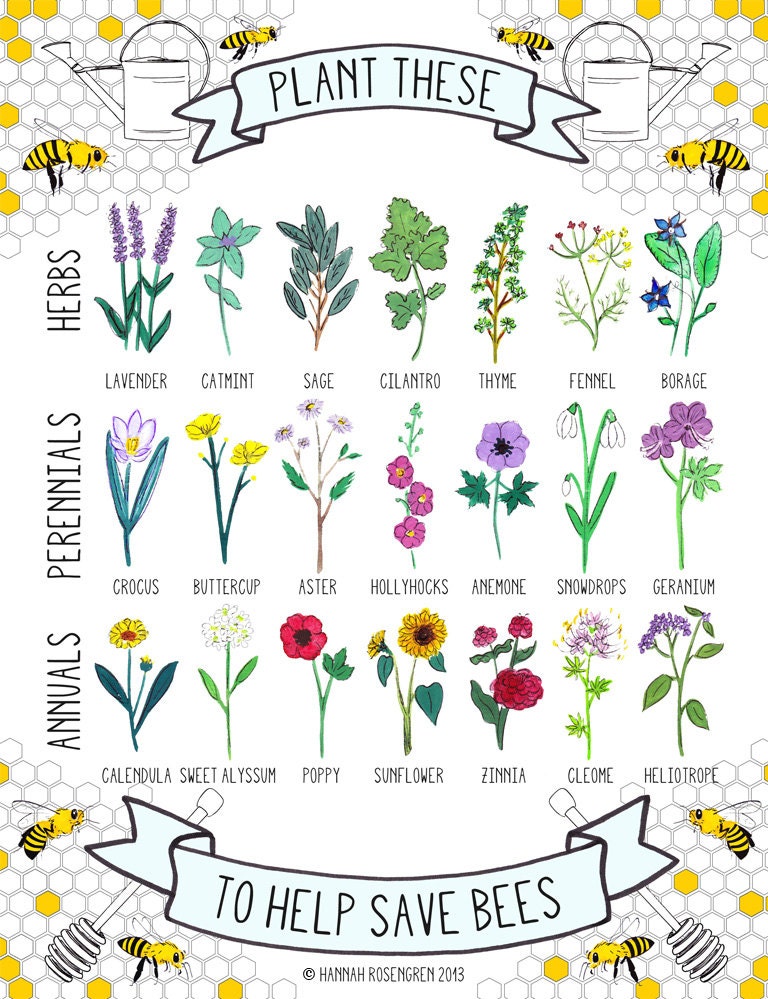
Some flowers that are perfect for spring bloom include: 

  • Bachelors Buttons
  • Snowdrops
  • Common Yarrow
  • Petunias
  • Marigolds
  • Bee Balm
  • Cosmos

All of these plants provide beautiful colors for your garden while also providing a nectar and pollen source for honeybees! You can find seeds and bulbs at your local garden store.

Monday, April 1, 2024

Honeybees Need Help Too

Honeybees do a lot to help us, but they need some help from us too.   

In the winter, honeybees eat food that the beekeepers leave in the beehive. By spring, the hive is usually getting low on food, so honeybees need to go visit flowers to collect pollen and nectar. The first flower that gives the honeybees lots of pollen and nectar is the dandelion. You can help honeybees by letting your grass get a little longer in the spring and letting the dandelions grow to give the honeybees food. Once dandelions are mostly white, honeybees can't get anymore food from the flower; then it is a good time to cut the grass. 


Planting flowers for honeybees to visit is another great way to help honeybees. Planting flowers that will boom at different times in the spring, summer, and fall make sure that they honeybees will have food all the time. 


One hive of honeybees can go through a gallon of water every day. They have to collect that water to drink and to cool down the beehive. Honeybees cannot swim, so you can help them get the water they need by putting some stones in a bird bath. The stones give the honeybees a place to land and sit while they are collecting water. Other than helping the honeybees get food and water, there is another way you can help them. 


Leaving the honeybees that you see on flowers, in the air, and drinking water alone to do their work helps the honeybees. Honeybees do not want to sting you. They are working to make honey and food for the beehive. Don't swat at honeybees when you see them, and give them some space to keep working. These are all very easy ways you can help honeybees do their jobs!

Monday, January 1, 2024

How Honey Bees Communicate

Honey bees communicate through various ways since they do not have ears. They use two different ways to communicate which are movement and odor. 

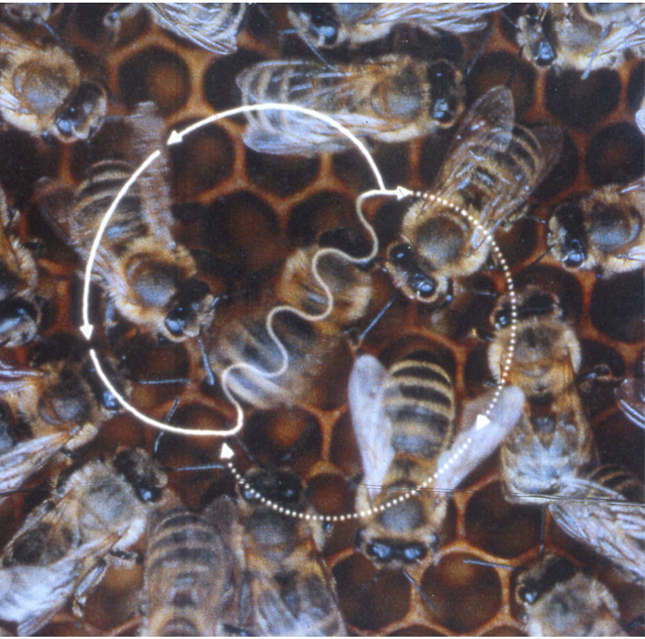
Honey bees have a “waggle” dance that they show to one another to tell each other the direction and distance of floral sources outside of the hive. Scout bees will point their body in the direction of the food source and will move her body and wings to produce a buzzing sound. This dance is a figure-eight pattern, with the smaller the figure-eight the closer the food is to home and the bigger the figure-eight the farther it is. 

The honey bee in the center is doing the waggle dance to tell other
honey bees where the food sources are outside of the hive.


In addition to communicating through movement, honey bees also use odors. The queen honey bee lets off a special pheromone smell so that workers know where the queen is and that she is healthy. Bee stings also produces a pheromone that alerts other honey bees that there is a threat. They will also use alarm pheromones to tell other honey bees that they need help defend the hive from outside threats. Fun fact: the alarm pheromone is said to be similar in smell to bananas!

Honey bees also use pheromones to communicate important information, 
such as if there is a threat present.


Friday, September 1, 2023

Different Ways to Help Honey Bees

Honey bees are vital for the pollination of many of our fruits and vegetables. Making sure we are all doing our part in helping them survive and grow is very important. 

Honey bee population numbers in the United States have been decreasing over time until about 10 years ago, but the population numbers have remained fairly stable since then. However, there are several things we can do to help honey bee populations.

  1. Grow a bee friendly garden:
    • Planting garden flowers and native wildflowers are a great source of nectar for honey bees! Some key flowers to plant are bee balm, sunflowers, lavender, goldenrod, and many more! In addition, planting trees, such as maples or black cherries, provide many blooms that support honey bees.
  2. Avoid pesticides and herbicides
    • Using pesticides and herbicides can be harmful to honey bees and other pollinators. Not using pesticides and herbicides can help honey bees, but if they need to be applied make sure to not apply them when flowers are blooming and do it at dusk or dawn when honey bees are not foraging.
  3. Support beekeepers
    • Buying honey and related products can be a great way to support honey bees. Another way to support both beekeepers and honey bees is to contact a beekeeper if you see a honey bee swarm. Beekeepers can help provide a safer home for honey bee swarms, which helps everyone out in the end.
  4. Be an advocate for honey bees
    • Teach others the importance of honey bees and other pollinators and ways they can help. Not everyone understands that honey bees are the number one pollinator in the world and their survival and success is so important!

There are many other ways to help honey bees and other pollinators, but this is a great list to help you get started! Be sure to do your part in helping the survival of honey bees, as they are vital to the pollination of so many of our foods.

Calling a local beekeeper about honey bee swarms
is a great way to help out honey bee populations!


Saturday, July 1, 2023

How Honey Bee Pollination Works

If it weren’t for honey bees and other pollinators, we would lose out on a lot of food that we eat on a daily basis, such as apples, oranges, and almonds. In fact, ⅓ of the food crops we eat are dependent on pollination and 80% of the pollination is done by honey bees. 

Pollination of flowers and crops is accomplished by honey bees through a simple process. Honey bees land on flowers to primarily collect nectar to make into honey, but also collect pollen on the millions of hairs that they have. They then fly to other flowers of the same type and pollen is dropped off when the honey bees collect more nectar. This then pollinates the blooms so that fruits, vegetables, nuts, and seeds are able to grow into the food we eat. More specifically, the pollen from the anther of a flower sticks to honey bees which is then inadvertently carried to the stigma of the flower, which is shown in the picture below.

Honey bee pollination is done by carrying pollen from
the anther of one flower to the stigma of another flower.


Monday, May 1, 2023

Top Flowers & Plants Honey Bees Like

Honey bees collect nectar and pollen from the flowers and plants they visit. However, there are certain flowers and plants that they tend to visit more than others. Knowing which flowers and plants that better attract honey bees can allow you to plant the right ones in your garden. Each type of flower has a different blooming season, length of life, and how tall they are. Knowing these details allows to you pick the perfect ones based on your needs.

Some of the top flowers that honey bees like are:

Bee Balm

  • Blooms in the Spring, grows back every year, and grows to 1-4 feet tall.

Black-Eyed Susan
  •  Bloom in the Summer and Fall starting the 2nd year, grows back every year, and grow to be 1-3 feet tall.
Purple Coneflower
  •  Bloom in the Summer and Fall, grows back every year, and grows to 2-4 feet tall.
Sunflower
  •  Bloom in the Summer and Fall, only grow/live for one season, and can range in height from 1-15 feet tall.
Wrinkle-Leaf Goldenrod
  •  Blooms from late Summer to Fall, grows back every year, and is about 3-4 feet tall.


Monday, February 6, 2023

Will You BEE My Valentine?

The world around us is full of amazing relationships between living things that help each other to survive and thrive. One of the most special relationships is between honeybees, flowers, and humans. Honeybees and flowers have a symbiotic relationship, which means they depend on each other to survive and grow. Honeybees help pollinate the flowers by transferring pollen from one flower to another, which helps the flowers grow into fruit and vegetables. In return for pollination, the flowers provide food for the honeybees in the form of nectar, which they make into honey. The health of us humans is dependent on this relationship between honeybees and flowers because pollination is responsible for 1/3 of the food we eat. That is why beekeepers help facilitate this relationship by bringing thousands of honeybee colonies to plants that need pollination. 

Just like how honeybees and flowers help each other, we can also help others in our own way. On Valentine's Day, people often exchange gifts to show their love and appreciation for others. This is a great opportunity for you to think about how you can give to others, just like how the flowers give food to the bees and the bees give pollination to the flowers. For example, you can make a special card or craft for someone you love, give a helping hand to a neighbor or friend, or even donate to a charity that helps people in need. By giving to others, we can help make the world a better place, just like how the relationship between honeybees, flowers, and humans helps us all to thrive. So let's be like honeybees and flowers, and give to others whenever we can! 

Click here to learn how to craft a charming paper bee with this video below. It's a thoughtful gesture to show appreciation for someone special. You could even write a nice note on the back!

Tuesday, December 1, 2020

What do Bees Eat?

Did you know that honeybees eat more than just honey? They eat a couple different types of food to stay healthy and have energy to work!

Of course honeybees eat honey! They make it from nectar, the sugary substance flowers make to invite the bees to visit. The honeybees gather this nectar to make into honey. You can learn about how honeybees make honey in our past post called “How Do Honeybees Make Honey?” The honey they eat is the source of carbohydrates and gives them energy. Did you know that honey is a good energy source for humans too!
The pollen baskets are packed full!

Honeybees also eat pollen (a powdery substance flowers make) for their protein. They mix the pollen with nectar and pack it onto their back legs into their pollen baskets. They then carry the pollen home to feed to the brood (baby bees). This pollen keeps the honeybees healthy so they can fight off infection in the hive and help the baby bees grow big and strong.
The milky substance inside the cells is royal jelly.


Royal jelly is a milky, protein rich substance that the honeybees feed special eggs to make them become a queen bee. If the egg wasn’t fed royal jelly then it would become a worker bee, but when an egg is fed the special food it supercharges their development so that they are able to lay eggs and become a queen bee. Royal jelly is made from glands in the bees’ head. Some people like to eat royal jelly because it has so many healthy proteins in it. While it doesn’t turn you into a queen bee it can be a great way to keep yourself healthy.

Lastly, honeybees drink water. All living animals need water and honeybees are no different. They look for slow moving sources of water because honeybees can drown. Pollinating and collecting nectar is a hard job and the worker bees need somewhere safe to land to take a drink of water. We wrote back in February about how you can build your own bee water bath!

Wednesday, April 1, 2020

How do Honeybees Make Honey?


Have you ever wondered how honeybees make honey?

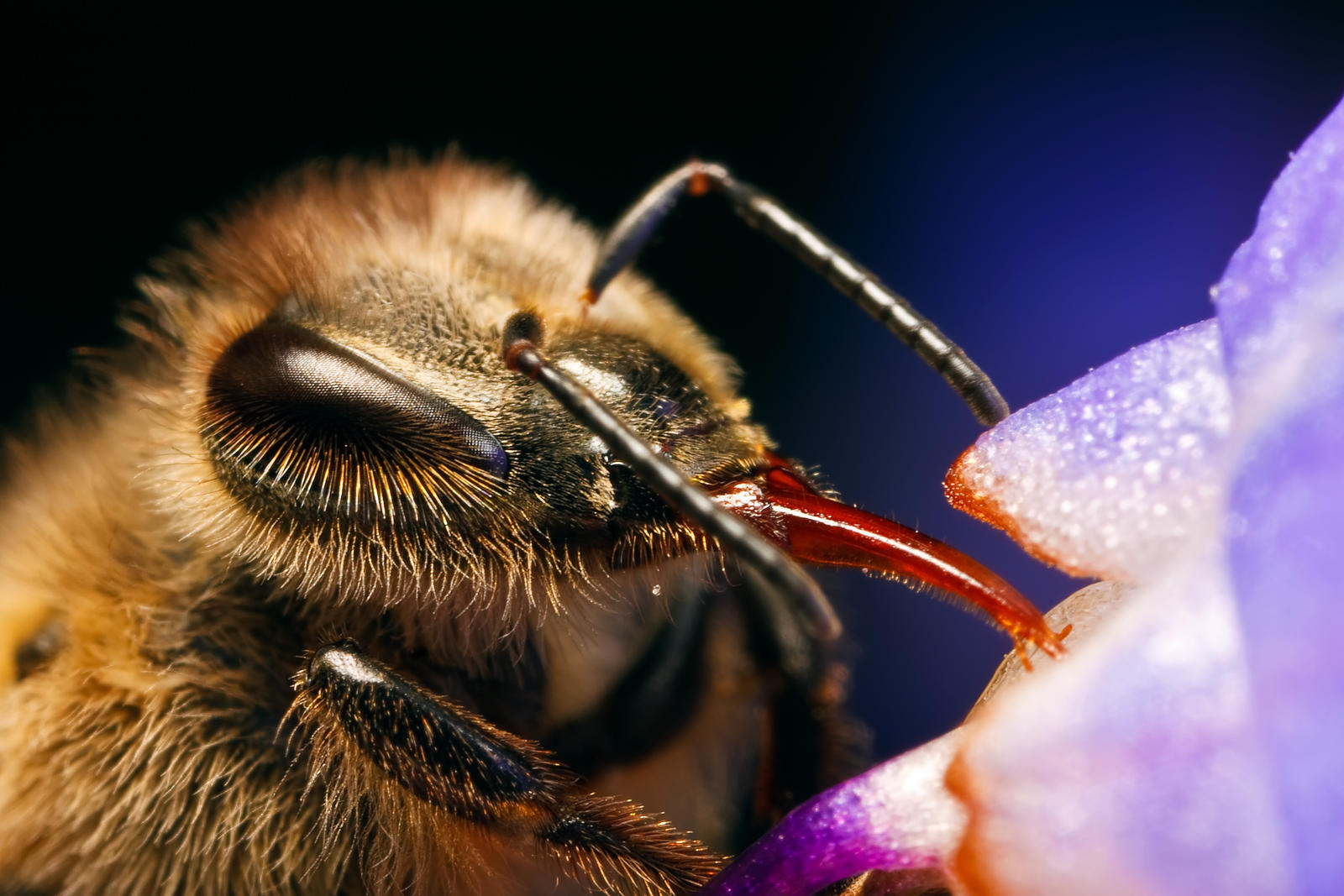
Well, flowers need pollination from honeybees to grow fruits, vegetables, and nuts. The way the flowers entice honeybees to pollinate them is by producing a sweet substance called nectar. The bees gather the nectar to turn into honey for their food. When a bee lands on a flower it will stick out its tongue (also called a proboscis). The proboscis is shaped like a straw and helps the honeybee suck up the nectar. 
Notice the bee's proboscis drinking the
nectar from the flower?

Photo: dalantech - deviant art

The nectar is then stored in a bucket inside their body called a honey sac. Honeybees can’t carry buckets like we can, so they store it in a special bucket inside their body. Inside the honey sac, the nectar is mixed with enzymes, special substances which give medicinal properties to honey. These enzymes add antibacterial, antimicrobial, and hygroscopic properties. That means honey is like nature’s Neosporin. Next time you get a cut or wound, put some honey on it and then a band-aid. The honey will clean the wound because of the cleansing properties and keep it moisturized and sealed to help it heal with as little scarring as possible. Many hospitals even use honey to help heal burns.

Honey stored in the honeycomb
Photo: Igor Dmitriey
While the honey is mixing with enzymes, the honeybee will fly home to her beehive. Inside the beehive the bee will deposit the honey from her honey sac into the honeycomb. The honeycomb is where baby bees are laid and born as well as the food (like honey) is stored. The bees will fan their wings over the nectar to dehydrate the honey (take some of the water out). Once some of the water is taken out, we have a thick, syrupy honey. The honeybees will put fresh beeswax over the honeycomb cells to make sure no dust or dirt comes in while the honey is stored until it is needed.

After all the hard work, the bees now have honey. Honey is their main food source, and they often have an excess amount of it. A beekeeper can then come in to take their extra honey they don’t need, so we can enjoy it too. Next time we enjoy honey drizzled on a biscuit or a honey smoothie, we should thank the hardworking honeybees.

Wednesday, April 3, 2019

Flowers for the Honeybees

Happy Spring Everyone!
Image result for seed ball plants
The life of a beekeeper is always buzzing, especially in the spring of the year! Beekeepers are beginning to get their new bees as well as prepare their honeybees for the adventures of the summer to come. The spring is an important time for honeybees. If you are looking for an easy way to help honeybees, leave the dandelions in your yard! Dandelions are the first floral sources for honeybees and will help get their hive off to a great start.

Are you looking for an activity to help honeybees? One thing you can do is to plant flowers in your yard that provide pollen and nectar for honeybees. Check out this activity on making seed balls!

Seed Balls:
2 parts potting soil
5 parts potter clay mix
1-2 parts seeds
Water

Mix together the soil, clay, and seeds in a large container. Once combined, add water little bits of water until it has the consistency of cookie dough. The balls should not be sticky. Once combined,  use your hands to form 1-2 inch balls. Let them dry overnight.

Now that you have your seed balls, it's time to plant them! Find an area with sunlight, flat landscape, and won't get mowed over. Next, place the seed ball where you would like the flowers to grow and let nature take care of the rest! There is no need to plant or water the seed ball as these require little to no maintenance to grow flowers. Best of luck planting!

Sunday, April 1, 2018

Helping Bees in Your Backyard

Your backyard is the perfect place to help honeybees! All it takes is the right food sources for bees, along with providing them with water.
A honeybee collecting from a dandelion.

Spring has officially arrived, and soon dandelions will start popping up everywhere! Before your dad (or whoever has the task of taking care of the lawn) starts up the lawn mower, tell them to wait a couple weeks. Dandelions are a honeybee's first food source before the other flowers start to bloom.

When it comes to other food sources for honeybees, we can help by planting what they like. Honeybees like plants and flowers that provide plenty of nectar and pollen. Some great flowers to plant for the spring are crocus and hyacinth. For summer and later blooms, try planting asters, goldenrod, cosmos, and zinnias. 

Honeybees safely drinking water.


With all the flying and work honeybees do to collect nectar and pollen, they get thirsty. Getting that drink of water can sometimes be difficult. To help the bees out, place marbles or rocks in a shallow dish, and add fresh water. The bees can land on the rocks without risk of drowning. Place the water container near your newly planted bee-friendly plants for easy access!

I hope you see how easy it is to help honeybees in your very own backyard! Check out this article for tips on how the average gardener can protect the bees. By simply planting the right flowers, letting your dandelions live longer, and providing a safe place for bees to drink, you are helping our bees to survive.

Thursday, June 1, 2017

Most Important Job

What do you think about when you hear the word Pollination? Honeybees are a big part of pollinating one third of the food we eat. Honeybees have a lot of hair on their bodies, and when they are flying the wind is blowing through their hair, which creates static electricity. Then when they land on the flower the pollen will literally hop on their backs because it is attracted to that electricity.  As the bees move from flower to flower, the same process will happen.  Some of the pollen that they already have sticking to their hair will fall off onto the other flowers, which is the process of pollination.
https://vavai.com/2014/02/


Some of the many fruits and vegetables that bees help pollinate are pears, apples, mangos, watermelons, strawberries, green beans, celery, onions, peas, and tomatoes, they also help pollinate coffee! But food is not all that bees pollinate. They also pollinate cotton, and alfalfa, which the cotton we use for clothing and the alfalfa we use to feed our dairy cows. Did you know that almonds are actually 100% dependent on bee pollination and commercial beekeepers will travel with their bees to California to help pollinate the almonds?
http://treefruit.wsu.edu/orchard-management/pollination/honey-bees/    


As you can see there are many different things that bees help pollinate for us. If you really think about it, the next time you are eating a meal, figuratively every third bite you take would be pollinated by bees. Bees are very vital to the human diet and to the environment.