Showing posts with label Spring. Show all posts

Sunday, June 1, 2025

The Honey Hydrator

When the weather heats up, staying hydrated becomes non-negotiable, especially if you're spending time outside or sweating it out at the gym. You don’t need anything fancy to feel refreshed. This two-ingredient honey hydrator is light, natural, and gives you just enough of a boost when you need it most.

Honey Hydrator Recipe
    Ingredients:
  • 12 oz cold water (bonus points if it’s filtered)
  • 1 teaspoon honey
    Instructions:
  1. Stir the honey into the water until fully dissolved.
  2. Pour over ice or keep it chilled in your water bottle.
  3. Sip + enjoy the subtle sweetness and light energy lift.
That’s it, fast hydration and a natural hit of energy when you're on the go. I love this before a workout, mid-hike, or even just running errands in the heat. A quick hydrator, with some natural antioxidants, and a sweet taste!


Saturday, April 1, 2023

The Inside Scoop on Beekeeping Tools


Happy Spring! As beekeepers are opening up their honeybee hives to prepare for another year of pollination and honey making, let's learn about the handy everyday tools that beekeepers use to check on their hives. Beekeepers across the United States utilize different methods of hive maintenance. Some of which have existed for centuries! There are a variety of ways to keep bees, but generally all beekeepers would agree that there are three vital tools required for going into a beehive. Let's explore the inside scoop on the essential tools of a beekeeper!

Hive Tool
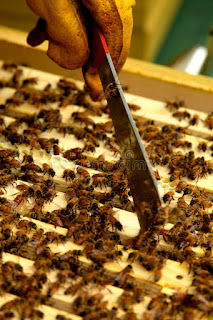
A hive tool is used to separate frames inside a honeybee hive.

Hive tools come in different styles. This is one of the most common.

            First, is one of the most essential tools, the hive tool. The name and current common designs of a hive tool have been utilized for at least a century, which demonstrates the desirability of its' multifunctional use across generations. The main reason beekeepers use a hive tool is because honeybees create a substance called propolis, made from tree resin and beeswax. Honeybees use this to seal up their hive to keep it safe from bad weather and pests. The hive tool allows beekeepers to pry open the hive's lid and separated the frames for inspection. The generic hive tool has other functions as well. Personally, I find new uses for it every day. It may be used as a hammer, a shovel, a nail remover, a crowbar, and of course, a hive beetle squasher. When the tool becomes coated in propolis, it is easy to clean by using another hive tool to scrape it off. Remarkably, this instrument is so useful that there are even travel-sized versions available for beekeeping on-the-go.

           Bee Veil or Suit

Beekeepers wearing a full-body bee suit which protects them from potential stings.

The next essential tool provides protection from stings. Some beekeepers use a cap and vail, which protects the face, along with long-sleeved and pants when working with a colony that they are familiar with. Other beekeepers wear a full body suit with thick layers of mesh that prevent bee stingers from reaching their skin. This is great for inspecting unfamiliar colonies. The downside to this full-body bee suit is that you could be mistaken for a giant marshmallow. However, during the hot summer, the hot weather may have you feeling more like a s'more in these bee suits. To complete the picture, all we need is a campfire, which brings us to the last tool of this inside scoop.

           Smoker
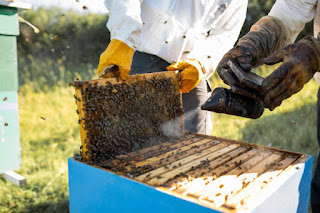
A smoker puffs smoke on the hive to mask alert pheromones.


          The smoker, or as I like to call it, the travel-sized campfire, is used to puff smoke onto the beehive to mask the alert pheromones (which smells like bananas) honeybees may produce when their hive is opened. This way they are more likely to behave calmly, allowing for an easier hive inspection. The smoker requires a flame and some fuel such as grass clippings, cotton, hay, pine needles, or other kinds of fuel that do the trick without harming the bees. It's very important that beekeepers ensure the smoke remains cool to prevent hurting the honeybee's wings. Once you're finished using the smoker, you'll need to scoop out the remaining fuel. Scooping out the remaining fuel can be challenging without the proper tool. That's where the hive tool also comes in handy, with its long, metal stick perfectly suited to the task. Ultimately, a beekeeper's toolkit would be incomplete without the hive tool, protective attire, and a smok
er.

Can you spot all three essential beekeeping tools mentioned earlier in the photo below?
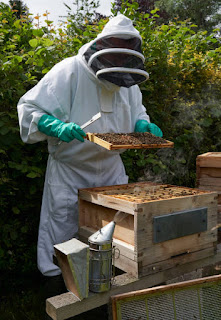
Spot the tools of a beekeeper! 


Wednesday, April 3, 2019

Flowers for the Honeybees

Happy Spring Everyone!
Image result for seed ball plants
The life of a beekeeper is always buzzing, especially in the spring of the year! Beekeepers are beginning to get their new bees as well as prepare their honeybees for the adventures of the summer to come. The spring is an important time for honeybees. If you are looking for an easy way to help honeybees, leave the dandelions in your yard! Dandelions are the first floral sources for honeybees and will help get their hive off to a great start.

Are you looking for an activity to help honeybees? One thing you can do is to plant flowers in your yard that provide pollen and nectar for honeybees. Check out this activity on making seed balls!

Seed Balls:
2 parts potting soil
5 parts potter clay mix
1-2 parts seeds
Water

Mix together the soil, clay, and seeds in a large container. Once combined, add water little bits of water until it has the consistency of cookie dough. The balls should not be sticky. Once combined,  use your hands to form 1-2 inch balls. Let them dry overnight.

Now that you have your seed balls, it's time to plant them! Find an area with sunlight, flat landscape, and won't get mowed over. Next, place the seed ball where you would like the flowers to grow and let nature take care of the rest! There is no need to plant or water the seed ball as these require little to no maintenance to grow flowers. Best of luck planting!

Sunday, April 1, 2018

Helping Bees in Your Backyard

Your backyard is the perfect place to help honeybees! All it takes is the right food sources for bees, along with providing them with water.
A honeybee collecting from a dandelion.

Spring has officially arrived, and soon dandelions will start popping up everywhere! Before your dad (or whoever has the task of taking care of the lawn) starts up the lawn mower, tell them to wait a couple weeks. Dandelions are a honeybee's first food source before the other flowers start to bloom.

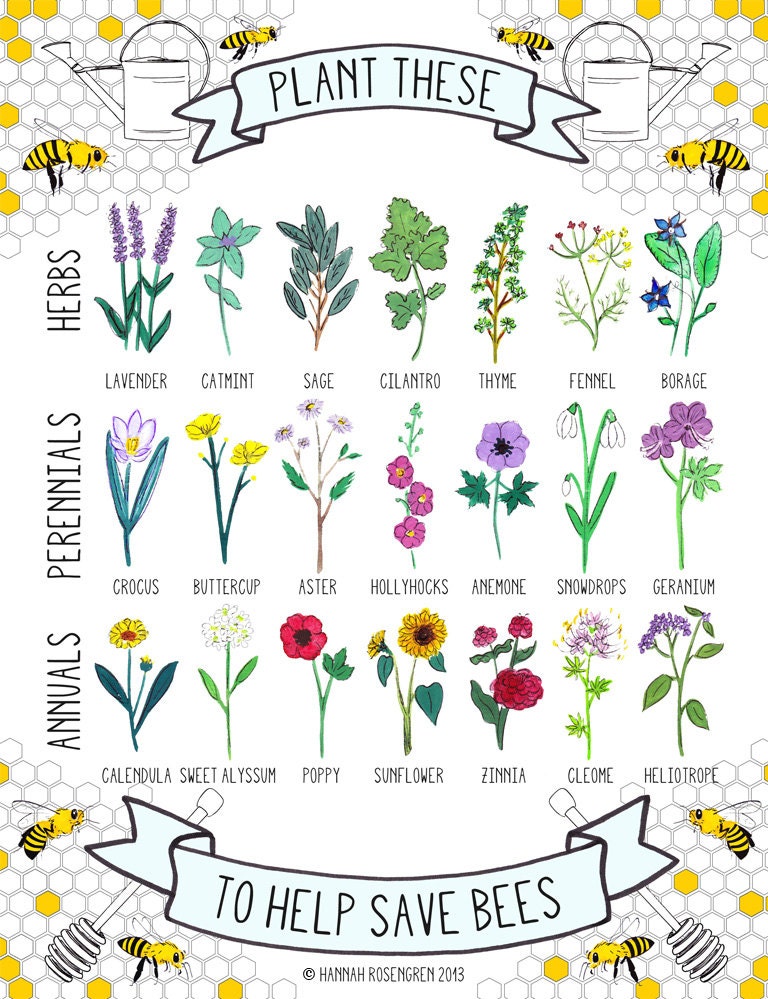
When it comes to other food sources for honeybees, we can help by planting what they like. Honeybees like plants and flowers that provide plenty of nectar and pollen. Some great flowers to plant for the spring are crocus and hyacinth. For summer and later blooms, try planting asters, goldenrod, cosmos, and zinnias. 

Honeybees safely drinking water.


With all the flying and work honeybees do to collect nectar and pollen, they get thirsty. Getting that drink of water can sometimes be difficult. To help the bees out, place marbles or rocks in a shallow dish, and add fresh water. The bees can land on the rocks without risk of drowning. Place the water container near your newly planted bee-friendly plants for easy access!

I hope you see how easy it is to help honeybees in your very own backyard! Check out this article for tips on how the average gardener can protect the bees. By simply planting the right flowers, letting your dandelions live longer, and providing a safe place for bees to drink, you are helping our bees to survive.