Showing posts with label american honey princess. Show all posts

Sunday, January 11, 2026

2026 Representatives Crowned

The American Beekeeping Federation held their 83rd Annual Convention in Mobile, Alabama. The new American Honey Queen and Princess have been crowned.


2026 American Honey Queen
Delanie Craighead from California

2026 American Honey Princess
Oceanna Escribano from Texas

Congratulations ladies! They will travel the United States promoting honey and beekeeping. Keep an eye out for the sweetest representatives in America!

Saturday, March 1, 2025

Bee-ing Sick is No Fun!

 As March comes along, so do sneezes and coughs! The flu season has begun, so it’s very important to wash your hands and cough or sneeze into your elbow bend. Just like we get sick, so do honeybees!


Honeybees have many different sicknesses that they can get. They can get viruses and fungal 
infections. Viruses and fungi are very, very small and can’t be seen by the regular eye. You will need a microscope to see them. A microscope is a tool scientists use to see very small objects, making them look larger.

I am a scientist in my college, and I work on helping honeybees who are sick and making medical treatments for them. I am studying the fungus called Nosema ceranae, more commonly called Nosema. Nosema can cause honeybees to be unable to fly, and in colonies with this infection, you can also see brown droppings on the outside of the hive box.

Viruses are non-living, which makes them different from fungi. This means that they need a living organism to transport them. A living organism that commonly transports viruses in the hive is the Varroa destructor mite, also known as the Varroa mite. One virus that honeybees can get is called the Deformed Wing Virus. This virus makes honeybee wings look crumpled and deformed. This means that the bee is unable to fly.

Honeybees can’t wear masks to help prevent spreading sicknesses in such close living quarters in the hive. But honeybees also have ways to avoid getting sick, called hygienic behaviors! Before a honeybee enters the hive after collecting nectar and pollen, there will be a bee at the entrance who will clean off any “germs” from her that she may have been exposed to. Also, when baby bees called larvae are still growing inside the hive comb cells, if an adult bee smells that a larva is sick, she will remove it from the hive to prevent disease.

More good news is that there are fantastic treatments that scientists are creating to help honeybees. These treatments are then sold to beekeepers so they can treat their colonies with their sicknesses and to control the spread of pests, like the Varroa mite.

Don’t forget to wash your hands, and I hope to “bee” seeing you soon!
~ Princess Emilia

Sunday, January 12, 2025

2025 Representatives Crowned

The American Beekeeping Federation held their 82nd Annual Convention in Reno, Nevada. The new American Honey Queen and Princess have been crowned!

2025 American Honey Queen
Cheyenne Bastian-Brown from Pennsylvania

2025 American Honey Princess
Emilia Burnham from California

Congratulations ladies! They will travel the United States promoting honey and beekeeping and post interesting articles about bees and honey along the way. Keep an eye out for the sweetest representatives in America!

Saturday, January 13, 2024

2024 Representatives Crowned

The American Beekeeping Federation held their 81st Annual Convention in New Orleans, Louisiana. The new American Honey Queen and Princess have been crowned!

2024 American Honey Queen
Kaelyn Sumner from Wisconsin

2024 American Honey Princess
Lainey Bell from Maine


Congratulations ladies! They will travel the United States promoting honey and beekeeping and post interesting articles about bees and honey along the way. Keep an eye out for the sweetest representatives in America!

Sunday, January 8, 2023

2023 Representatives Crowned in Jacksonville

The new American Honey Queen and Princess were selected at the 80th Anniversary American Beekeeping Federation Convention in Jacksonville, Florida.

2023 American Honey Queen
Selena Rampolla from Florida

2023 American Honey Princess
Allison Hager from Iowa


Congratulations ladies! They will travel the United States promoting honey and beekeeping and post interesting articles about bees and honey along the way. Keep an eye out for the sweetest representatives in America!

Tuesday, November 1, 2022

Medicinal Uses of Honey

 Has a loved one ever made you a hot cup of tea with honey when you were sick? That drink was doing much more for you than being a comfort. Honey has many health benefits, and has been used for medicine since the time of Ancient Egyptians. 

Honey is an anti-inflammatory, antibacterial, and antioxidant. If you have a sore throat, the anti-inflammatory properties of honey will work to immediately calm it down.

Due to its anti-inflammatory properties, honey is a common ingredient in cough drops.

Honey is also a humectant, which means that is preserves moisture. Many people put honey on burns to help heal the skin faster. 

Look for a darker honey when seeking out honey for its medicinal properties. 

A good rule of thumb when looking to honey for its medicinal uses is the darker the honey, the better it is to use for medicine. Darker honey typically contains less water and more nutrients such as antioxidants. Some varieties of dark honey include: buckwheat, chestnut, and dandelion. Ask your local beekeeper about darker varieties, and consider honey as your health aid next time you are sick!

Thursday, September 1, 2022

Hive Talk: Communication Between Honey Bees

Personally, my favorite part about beekeeping is watching the bees interact with each other in the hive. 

From building comb, feeding brood, protecting the hive, and making food, a bee hive operates like a well oiled and very efficient machine. This cannot occur without proper communication.

Honey bees have two main ways of communicating to the other bees in the hive.  

The Waggle Dance is the way bees tell their fellow foragers about food sources nearby. The worker bee will walk in a straight line angled in the same way the food source is in relation to the sun.  The distance of the nectar source is communicated by how long the worker walks in that line. The excitedness of the dance is related to how plentiful the food source is. The full dance makes a figure eight. 

Example of the waggle dance


Honey bees also communicate through pheromones. Pheromones are natural chemicals that are excreted to evoke a response within the same species. Honey bees have one of the most complex pheromone systems in nature. Honey bees use pheromone communication in every aspect of their life.  For example. the alarm pheromone is used to tell guardian bees that the hive is being threatened, and needs to be protected. It is said that the alarm pheromone smells like bananas. 

Could you imagine communicating solely through movement and scent? Honey bee communication is just one of the few things that make the insect absolutely amazing. 

Sunday, May 1, 2022

Background of the Bee Suit

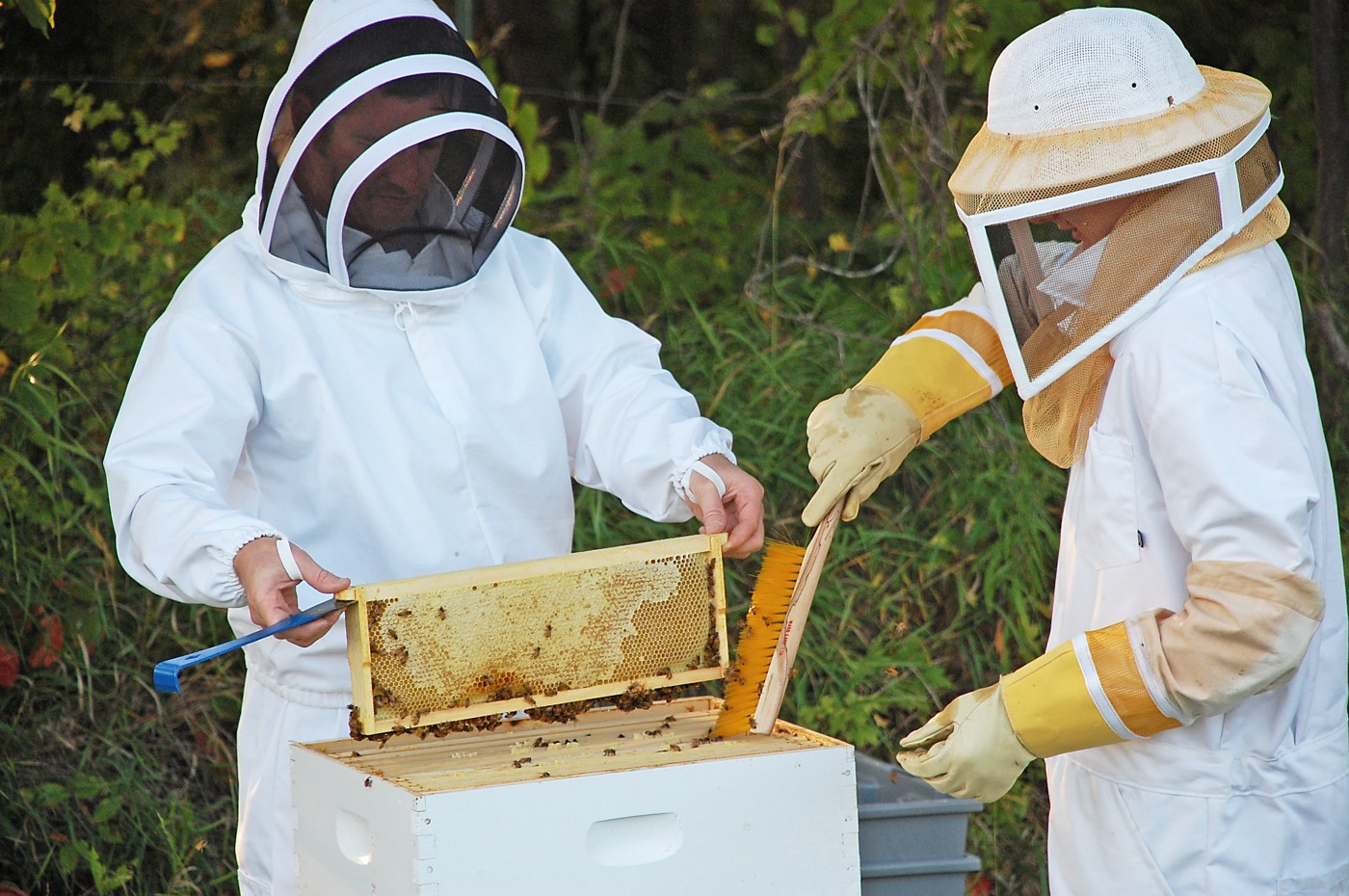
A fundamental piece in a beekeeper's toolkit is the bee suit. The classic all-white jumpsuit with mesh veil is the first thing someone thinks of when the word beekeeper is mentioned. The bee suit has been optimally fitted for beekeeping. Let's take a look at some of the different elements of the bee suit and the purpose of the design. 

beekeepers working in the hives while wearing their bee suits

Bee suits are light in color, most commonly seen in white. Predators of the hive such as bears, raccoons, and skunks all have dark fur. Because of this, darker colors alarm bees more than very light colors do. 

Bee suits can be made in a thick canvas material. The canvas suit is effective in keeping bees out and preventing stings, but can get extremely hot. Spending hours a day working in hives during the spring and summer months can be a very physically taxing job. Now, the popularity of mesh suits has risen. These new suits have layered mesh, which allow airflow while also protecting the beekeeper from a potential sting.
Another facet of the bee suit are gloves, in order to avoid stinging in the hand. A beekeeper's gloves are typically made out of goat leather. Goat leather is not as inpenetrable as leather from cows, but it is softer and thinner, giving the beekeeper more ability to move. Beekeeping can be incredibly delicate work, so free range of motion is important. Bee suits are specially designed for being in beehives and around honeybees. They are useful for any beekeeper!

Sunday, January 10, 2021

2021 Representatives Crowned Virtually


The new American Honey Queen and Princess were selected at the 2021 American Beekeeping Federation Convention held virtually this year.

2021 American Honey Queen
Jennifer Hinkel from Wisconsin

2021 American Honey Princess
Virginia Allen from Texas

Congratulations ladies! They will spend the year promoting honey and beekeeping throughout the United States and post interesting articles along the way. Keep an eye out for the sweetest representatives in America!

Sunday, January 12, 2020

2020 Representatives Crowned in Illinois

The new American Honey Queen and Princess were selected at the 2020 American Beekeeping Federation Convention in Schaumburg, Illinois.

2020 American Honey Queen
Mary Reisinger from Texas

2020 American Honey Princess
Sydnie Pauslrud from Wisconsin

Congratulations ladies! They will travel the United States promoting honey and beekeeping and post interesting articles about bees and honey along the way. Keep an eye out for the sweetest representatives in America!
Image courtesy of David Loeb

Sunday, January 13, 2019

2019 Representatives Crowned in Myrtle Beach

The new American Honey Queen and Princess were selected at the 2019 American Beekeeping Federation Convention in Myrtle Beach, South Carolina.

2019 American Honey Queen
Hannah Sjostrom from Wisconsin

2019 American Honey Princess
Nicole Medina from New Jersey

Congratulations ladies! They will travel the United States promoting honey and beekeeping and post interesting articles about bees and honey along the way. Keep an eye out for the sweetest representatives in America!

Saturday, December 1, 2018

Happy Holidays


Happy Holidays to everyone! December is a busy month full of celebrations. Hannukah and Christmas are among the top most celebrated holidays. As American Honey Queen, I think of how to incorporate honey and other products of the hive into my celebrations!

Beeswax candles are used for Hannukah.
This year, Hannukah, the Jewish Festival of Lights, runs from December 2-10, where candles are lit every day in celebration of the re-dedication of the second Jewish Temple in Jerusalem. The candles used can be beeswax. Beeswax candles burn longer, give off a slight honey smell, and are environmentally friendly.

Like most holidays, there is always cooking and special foods involved. A traditional food for Hanukkah is fried latkes. Check out this recipe for honey inspired applesauce and latkes.

Christmas, the celebration of the birth of Jesus Christ, takes place on December 25. This popular holiday is often filled with gift giving. If you need a last minute gift, consider giving a book on beekeeping or unique flavor of honey to a friend or family member. If you know a beekeeper that you still need to give a gift to, consider a new set of gloves or hive tool.

Another food filled holiday, most families sit down for a meal as part of their Christmas celebration. Your Christmas meal would be great if it included honey! Check out this recipe for Pineapple Honey Glazed Ham.

No matter what holiday you celebrate, I hope you have a sweet time!

Have a happy holiday!


Thursday, November 1, 2018

Honey Turkey Thanksgiving

You can't have Thanksgiving without the turkey! But, have you ever thought about using honey on your turkey?

Here are some of my personal favorite Thanksgiving honey recipes:

HERBED TURKEY BREAST

YIELD: Makes 6 servings
INGREDIENTS
1/2 cup - honey
1/4 cup - orange juice
2 T - butter or margarine, melted
1 1/2 tsp. - dried sage
1 tsp. - dried thyme
1 clove - garlic, minced
3/4 tsp. - salt
1/4 tsp. - pepper
1 - boneless, skinless turkey breast, about 2 lbs.
DIRECTIONS
Preheat broiler. Position oven rack 6 inches from heat source.
Combine honey, orange juice, butter, sage, thyme, garlic, salt and pepper.
Place turkey breast on rack set in broiler pan. Brush with some of honey mixture. Broil, brushing frequently with remaining mixture, turning turkey once, until no longer pink inside, about 40 minutes.
Let stand 5 minutes before slicing.

CHUNKY APPLE CRANBERRY SAUCE

YIELD: Makes 4 cups
INGREDIENTS
2 cups - fresh cranberries
2 - tart apples, peeled, if desired, cut in 1/4-inch slices
1 cup - chopped onion
1/3 cup - olive oil
1/3 cup - honey
4 tsp. - red wine vinegar
1/4 tsp. - ground ginger
1/4 tsp. - ground cinnamon
Freshly ground black pepper
DIRECTIONS
In a medium saucepan stir all ingredients. Heat to a boil. Lower heat, cover and simmer 15 minutes; stirring occasionally.
Cool and refrigerate.

HONEY CORNBREAD STUFFING

YIELD: Makes 4 servings
INGREDIENTS
4 cups - day-old Honey Cornbread, crumbled
1 (4 oz.) - Italian sausage
1 cup - chopped green bell pepper
1/2 cup - minced onion
1/2 cup - chopped celery
1 T - minced parsley
1 tsp. - dried thyme leaves, crushed
1 tsp. - salt
1/4 tsp. - ground black pepper
1/3 cup - chicken broth
2 T - honey
DIRECTIONS
In large bowl, place crumbled cornbread.
Remove sausage from casing. In medium skillet, crumble and sauté sausage until brown. Using slotted spoon, remove sausage from skillet and add to cornbread. Drain all but 1 T of fat.
Return skillet to medium-high heat; stir in bell pepper, onion and celery. Sauté until vegetables are soft, about 5 minutes. Stir in parsley, thyme, salt and pepper. Cool slightly, then add to cornbread.
In small bowl, combine broth and honey. Pour over stuffing.
Place stuffing in a greased 9x9-inch baking dish. Cover dish with foil and bake at 350°F for 20 minutes. Remove foil and bake another 10 minutes until stuffing is lightly browned. 
TIP
As an alternative, pack you may pack stuffing into poultry cavity before roasting.
I hope you have a wonderful honey-and-family-filled Thanksgiving! For more honey recipes, click here!


Monday, October 1, 2018

Honey Halloween


Happy Halloween! October is a great month for bonfires, playing in the leaves, and of course getting dressed up for a night of candy collecting. For most beekeepers, October is spent preparing the hives for winter. With the bees becoming less active, we can still be creative and pull inspiration from those fuzzy friends of ours.


This family wears bee, skep,
and beekeeper costumes.

If you don’t want to dress up as the usual witch, Frankenstein monster, or vampire, how about a bee inspired costume! Throw on a black and yellow striped shirt, a set of antenna, and a stinger and you are ready to be a honey bee.

Try putting a costume on your honey bottle for Halloween!
Who says only people can dress up for Halloween? Grab a bottle of honey, some craft supplies and your imagination for a decorating contest. A little bit of construction paper, tissue, paper, glue and markers will go a long way to make your ordinary bottle or jar of honey into a dressed up masterpiece! If you are having a Halloween party, a honey bottle decorating contest would be a great addition.

Honey sticks are a great
treat to give out at
Halloween!
If you love honey like I do, then you would be excited to get a honey stick or a piece of honey candy on Halloween. If you friends or family want to give something different out to "trick or treaters," suggest honey sticks or honey candy. Honey is a great treat for everyone, and I bet many of your classmates would enjoy some honey in their candy containers!

Saturday, September 1, 2018

Happy National Honey Month

National Honey Month is a celebratory month in the United States held annually during the month of September. The awareness month was initiated by The National Honey Board in 1989.
Its purpose is to promote beekeepers, the beekeeping industry, and, of course, honey, as a natural and beneficial sweetener.
September is significant for honey producers, as it typically marks the end of the honey collection season for beekeepers in the United States.
Make sure to eat lots of honey, go to a beekeeping event, and talk to a beekeeper this month! 

honey jar

Wednesday, August 1, 2018

Products of the Hive


The wonderful world of a beehive has long been known as the location where our honey bees make honey. What many don’t know is that honey bees make and collect other products for the hive. Those products can be extracted and utilized by us in our daily lives.


Honey
Honey is the most common product of the hive.
Honey is the most commonly thought of product that comes from the hive. Honey bees collect nectar from the hundreds of flowers they visit in a day. That nectar gets returned to the hive where it is deposited into a honey comb cell. The nectar is then fanned by a worker bee’s wings to get a lot of the moisture out for it to be turned into the honey we enjoy. Honey can be used for cooking instead of granulated sugar, for treating minor cuts and scrapes, and is a great remedy for treating a sore throat.


                                                              Beeswax
Beeswax is made from honey bees' bodies.
Honey bees produce tiny scales of beeswax from their body that they use to build up the honey comb and cover the nectar that has been turned into honey. Beeswax that is extracted can be used to make beeswax candles, lip balms, and other skin care products.


Pollen
Pollen is collected by honey bees to be used as food.
When a honey bee visits flowers to collect nectar, it is also collecting pollen. The pollen collected is stored on the back two legs of the bee on their pollen baskets. The pollen collected is returned to the hive where it is stored in a honey comb cell to be used for food. Some people use pollen as a protein supplement. They add it to their cereal, yogurt, or even in smoothies.


Pictured is royal jelly in queen cells
Royal Jelly
A worker honey bee has glands on their head that produce a special liquid we call royal jelly. This jelly is crucial for growing queen bees, but humans also use it. Royal jelly contains botox, which prevents wrinkles, it is shown to help with wound care and can be found in skin and hair care products like the shampoo I use!

Friday, June 1, 2018

Honey Varieties

The Clover Honey pictured is made from the nectar of
the purple clover flowers also pictured.

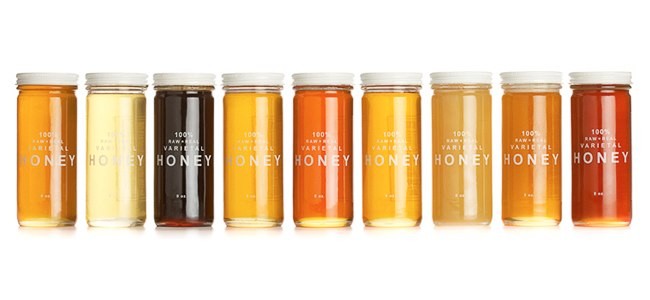
Honey is a sweet treat that our honey bee friends make! The honey they make, and we enjoy, is made from the nectar of flowers. Each flower has a unique nectar that produces a unique honey. There are more than 300 different honeys in the United States, and more than 3,000 in the world. 


Those hundred and thousands of honey varieties have different tastes, textures, colors, and characteristics. Some honeys crystallize quicker than others, while others have an overall thicker consistency. You can have honey that is almost clear in color like Fireweed, but also honey that is so dark you can’t see through it like Buckwheat. With those different colored honeys comes different flavors and uses.

Honey’s beautiful spectrum of colors provide endless opportunity. Darker colored honeys have a stronger taste and can be great for cooking with meat. The lighter colored honey varieties are sweeter and perfect for using in baked goods.


A small sample of the varieties of honey
made by honey bees.
Some honeys even have very unique flavors based on the flowers the nectar came from. Orange Blossom Honey is a lighter colored honey, almost orange in color! It is sweeter and you can taste the citrus in it. Another unique honey is Sage Honey. It is a lighter colored honey that granulates (gets hard) slower than other types of honey.

The next time you are at a farmer’s market or see a honey booth at a fair or festival, look at the different honey for sale. You might see a wide variety of colors, and if you get the chance, you’ll be able to taste the different flavors and textures.

Tuesday, May 1, 2018

Kid-Friendly Honey Recipes

Everyone loves a good honey recipe, but sometimes they're a little too hard to do on your own. I found some delicious recipes that are great for kids! Before starting, always have an adult in the kitchen with you, but let us know how you liked making these yummy spring honey recipes!
Honey Bear Lunchbox
YIELD:  Makes 1 serving
INGREDIENTS
1 1/2 tsp. - honey
2 slices - whole-grain bread
1 T- peanut butter
1/4- honey-crisp or granny smith apple, thinly sliced
Fresh berries and veggies for the lunchbox
DIRECTIONS
Place bread on a flat surface and spread peanut butter onto both slices of bread. Place apple slices onto one side, drizzle with honey and close sandwich.
Serve with freshly washed berries and veggies.

No-Bake Chocolate Honey Brownies
YIELD: Makes 16 servings
INGREDIENTS
1/2 cup - honey
1/4 cup - coconut oil
1/4 cup - almond butter
1/4 tsp. - sea salt
1 tsp.- vanilla extract
1 tsp.- ground cinnamon
1/2 cup - chopped almonds
1/2 cup - chopped walnuts
1/2 cup - semi-sweet chocolate chips
1/4 cup - sunflower seeds
1/4 cup - dried cranberries
1 cup - rolled oats
1 T- butter
DIRECTIONS
In a medium-sized saucepan, heat honey, coconut oil, almond butter, sea salt, vanilla and cinnamon over low heat.
Next, in a large bowl combine chopped almonds, chopped walnuts, semi-sweet chocolate chips, sunflower seeds, dried cranberries and rolled oats. Add the honey mixture from the saucepan into the bowl and mix.
Using your hands or a spatula, grease an 8" x 8" pan with the butter.
Press the brownie mixture into the pan and refrigerate until hardened. Cut into 16 bars and serve.
Recipe courtesy of Fitness Expert Bárbara Trujillo Gómez


Honey-Yogurt Popsicles
YIELD: Makes 8 servings
INGREDIENTS
2 cups - plain yogurt
1 cup - milk
1/3 cup - honey
1 tsp. - vanilla extract
1/4 lb. - cherries, pitted and quartered
1/4 cup - blueberries
DIRECTIONS
In a large bowl, stir together the yogurt, milk, honey and vanilla extract. Taste the mixture and add a little more honey if needed.
Divide half the fruit among 8 ½-cup popsicle holders.
Add ¼ cup of the yogurt mixture to each popsicle holder, then add the rest of the fruit. You'll need to press the fruit down a bit to distribute it evenly in the popsicle. Top off with more yogurt mixture if needed, leaving at least ¼ inch of space at the top of the popsicle holder because it will expand as it freezes.
Freeze the popsicles for several hours, until completely solid.

You can find more amazing kid-friendly honey recipes here.

Thursday, March 1, 2018

Honey is More Than a Sweet Treat!

Honey is an amazing substance. It is a health-conscious sweetener, the only never-spoiling food, and is full of vitamins, minerals, and antioxidants. Honey comes in more than 3,000 varietals worldwide, depending on the nectar source from the honeybee! This causes each honey varietal to have a unique color, flavor, and chemical makeup. While most people know honey as a sweet food, many do not know about honey’s other uses.

Image result for honey varietals
Honey comes in over 3,000 varietals worldwide.
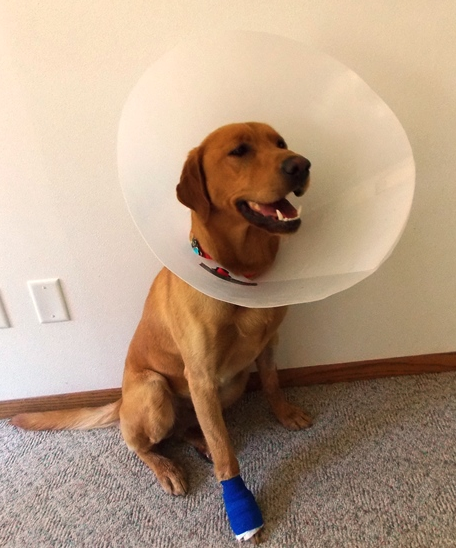
One of the most remarkable things about honey is that it is antibacterial. With Spring just around the corner, more and more folks are outside to enjoy the fresh season! However, between gardening, hiking, and other outdoor activities, there’s bound to be some scraped knees here and there. An incredible and natural way to care for minor wounds is honey! Some years ago, my dog Chuck ran away from home. When we finally caught up to him, he had a large cut on his paw. We took Chuck to the veterinarian, and after getting a number of stitches, she asked us to put honey on his wound. Because honey is only 17% water, bacteria cannot live in it. Additionally, honey is so viscous and thick that when it covers a wound it not only blocks bacteria from entering the wound, but it actually draws bacteria out. At the same time, it secretes a minute amount of hydrogen peroxide which actually promotes the healing process. Today, Chuck has minimal scarring and his paw is just fine. Honey works the same way on humans as it did on Chuck. Many hospitals now order honey in bulk for its medicinal purposes.
Chuck wearing a veterinarian- recommended honey cast for his wound.
Honey and other hive products are also often used in natural cosmetics. Being allergic to many artificial substances, I opt for all-natural cosmetic products, which typically feature honey. For example, the honey in my shampoo creates beautiful iridescent bubbles and develops a natural sheen to my hair because of its many vitamins and minerals.
Honey is truly a miracle substance. While many people only see honey as a delicious sweet treat, it is so much more than just a food!

Monday, January 15, 2018

2018 Representatives Crowned in Reno

The new American Honey Queen and Princess were selected at the 2018 American Beekeeping Federation Convention in Reno, Nevada.

2018 American Honey Queen
Kayla Fusselman from Pennsylvania

2018 American Honey Princess
Jenny Gross from Wisconsin

Congratulations ladies! They will travel the United States promoting honey and beekeeping and post interesting articles about bees and honey along the way. Keep an eye out for the sweetest representatives in America!
2018 American Honey Queen Kayla Fusselman and 2018 American Honey Princess Jenny Gross