Showing posts with label Anatomy. Show all posts

Thursday, January 1, 2026

Are Bees Better Flyers than Airplanes?

Queen Cheyenne and Princess Emilia flew on an airplane to many states in 2025! We flew to Wisconsin, Nevada, Florida, Kentucky, and more! This made us think…are honeybees better flyers than airplanes?

Honeybee can beat their two pairs of wings at 11,700 times per minute, that is pretty fast! That fast buzzing is also what makes their distinct buzzing sound. Additionally, bees don’t move their wings up and down, like birds; or have motors like an airplane. Bees move their wings in a figure-eight pattern which allows them to have more lift and control when they fly.


Because of this, there are some interesting things that honeybees do that planes cannot:

  • Hover in place like a helicopter

  • Fly backwards and sideways

  • Turn quickly in mid-air

  • Land on flowers without crashing

  • Carry heavy loads like nectar and pollen while still flying 12 mph!

Scientists were unsure of how honeybees and bumblebees could fly because their bodies are too big for their wings to typically handle! However, they defy the odds because of their strong flight muscles in their body and fast speed.

So even though bees are small, they are some of the best pilots in the natural world! 

Monday, September 1, 2025

All About Honey: How Is it Made?

Happy National Honey Month! 

Have you seen honey in your local grocery store? The farmer’s market? Your own kitchen at home? Have you ever tasted honey on toast or in tea? You may know that honeybees make it…but how?

When bees visit flowers, they drink a sweet syrup called nectar using their straw-like tongue called a proboscis and carry it back to their hive in their honey stomach. There, they exchange the nectar with other bees in the hive using their proboscis, which they insert into their honeycomb cells. The bees flap their wings at 11,700 times per minute to dry it out (dehydration), and then allow the nectar to mature into thick, sweet honey! Once it’s ready, they seal it up with wax to keep it fresh. Like adding a lid to their very own honey jar! 


Not all honey is the same. It can look and taste different depending on the flowers the bees visit. Orange blossom honey is light and fruity, while buckwheat honey is dark and bold. Some honey is runny, and some is thick like buttery fondant! There is a honey for everybody!

Want to try honey for yourself? Visit a farmers' market in your town with your family or friends and taste different kinds made by local honeybees. You can also try cooking with honey at home using the recipes from our blog, drizzle it on toast, stir it into yogurt, or sweeten tea with a spoonful.

Next time you enjoy honey, make sure to thank the busy bees who made it!

Tuesday, December 1, 2020

What do Bees Eat?

Did you know that honeybees eat more than just honey? They eat a couple different types of food to stay healthy and have energy to work!

Of course honeybees eat honey! They make it from nectar, the sugary substance flowers make to invite the bees to visit. The honeybees gather this nectar to make into honey. You can learn about how honeybees make honey in our past post called “How Do Honeybees Make Honey?” The honey they eat is the source of carbohydrates and gives them energy. Did you know that honey is a good energy source for humans too!
The pollen baskets are packed full!

Honeybees also eat pollen (a powdery substance flowers make) for their protein. They mix the pollen with nectar and pack it onto their back legs into their pollen baskets. They then carry the pollen home to feed to the brood (baby bees). This pollen keeps the honeybees healthy so they can fight off infection in the hive and help the baby bees grow big and strong.
The milky substance inside the cells is royal jelly.


Royal jelly is a milky, protein rich substance that the honeybees feed special eggs to make them become a queen bee. If the egg wasn’t fed royal jelly then it would become a worker bee, but when an egg is fed the special food it supercharges their development so that they are able to lay eggs and become a queen bee. Royal jelly is made from glands in the bees’ head. Some people like to eat royal jelly because it has so many healthy proteins in it. While it doesn’t turn you into a queen bee it can be a great way to keep yourself healthy.

Lastly, honeybees drink water. All living animals need water and honeybees are no different. They look for slow moving sources of water because honeybees can drown. Pollinating and collecting nectar is a hard job and the worker bees need somewhere safe to land to take a drink of water. We wrote back in February about how you can build your own bee water bath!

Tuesday, October 1, 2019

Eye of the Bee-holder

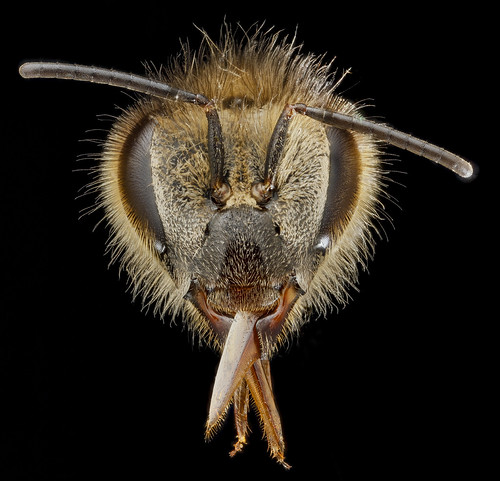
Image result for eyes of a honeybeeYou may have heard the phrase, "beauty is in the eye of the beholder," but have you ever wondered what beauty looks like through the eyes of a bee? The honeybee has five astonishing eyes to take in the wonderful world around it! Honeybees have three eyes on the top of its head. These eyes are called simple eyes as they sense the light around the bees. The other two eyes are on the sides of the honeybee's head and are called compound eyes. These eyes are used to detect patterns and shapes the bee might need to see such as plants.
Image result for waggle dance
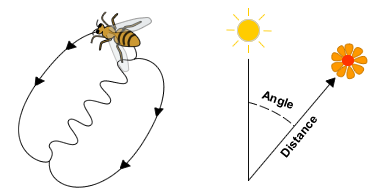
Waggle Dance the honeybees use to communicate
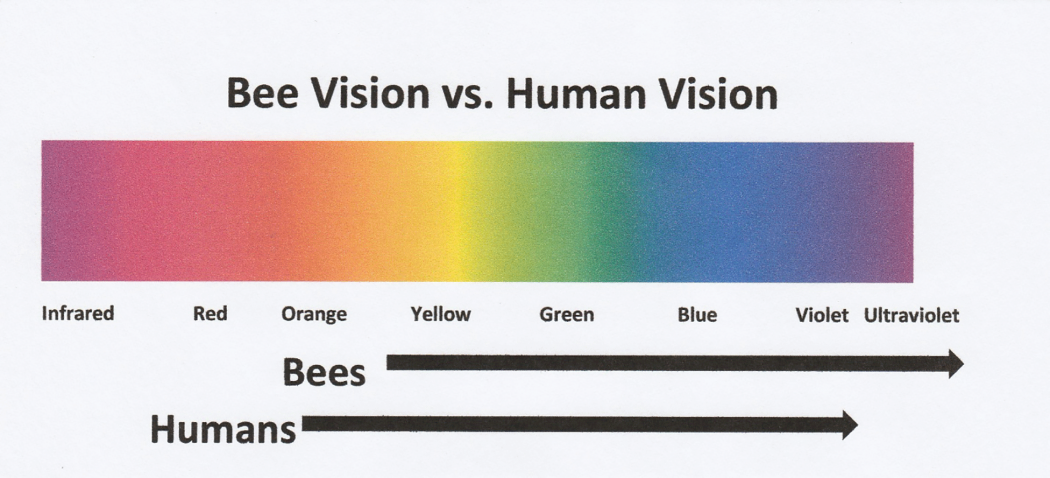
Honeybees use their amazing eyes to see different colors! They can see more colors on the purple end of the color spectrum than humans can! The reason for this is so honeybees can find flowers with the sweetest nectar. Honeybees are a lot like humans in that they have favorite colors. Honeybees use the color of the flower to be able to sense the sweetness of the nectar. Many times, honeybees will go to the sweetest nectar flowers before going to the rest of the flowers around.

Once the honeybee finds the flower, they go back to the hive to tell the rest of the forage worker bees where to go! Unfortunately, honeybees don't have GPS that they plug the coordinates into. What they do to direct everyone to the flowers is dance instead! The honeybees communicate by doing the waggle dance. This is where the honeybees will go back to their hive and run around in a figure 8 to communicate with the bees. Directions are determined based on the direction the honeybee is facing and the angle in relation to the sun! It's not quite a GPS system like we use, but a very unique way honeybees communicate with each other!

Wednesday, April 1, 2015

The Honey Bee Count (basic honey bee anatomy)


Honey bees are amazing insects and have amazing and interesting little bodies. There are six main parts of the honey bee’s anatomy (her body) that I’m going to cover here. They are easy to remember if you count from one to six.
 
A honey bee stinger
One Stinger: Honey bees have one STINGER and can only sting one time, and then they die. Unlike other stinging insects (such as wasps) that have smoother stingers, the honey bees stinger has tiny barbs that are like hooks and get caught in what they are stinging. The bee tries to pull her stinger out but those barbs won’t budge and instead her stinger, a poison sack, and some of her intestines are ripped from her body. She cannot live without these so she flies off and dies. The little poison sac attached to the stinger will continue to pump venom until the stinger is removed Watch THIS video to see what happens when a bee stings.

Full pollen baskets on the bees back legs


 Two Pollen Baskets: The worker bees have two POLLEN BASKETS located on their back legs. These baskets are similar to the pockets you may have in your jeans, but on the bees they are made up of tiny hairs. Their body gets covered in pollen while they’re on flowers and they use special combs on their front legs to brush the pollen from their body into the pollen baskets. Then they bring that pollen back to their beehive where the bees will use it for food.


A is the head, B is the thorax, C is the Abdomen


Three Main Body Parts; Head, Thorax, Abdomen:  Honey bees have three main body parts, the head, thorax, and abdomen. On her HEAD the honey bee has two antennas which she uses to smell and touch. She also
has mandibles which are part of her mouth. She uses her mandibles to chew. The worker bees also have special glands inside their head that make food for the baby bees. The THORAX is where the wings attach to, and her ABDOMEN is where her digestive tract (stomach), heart, and stinger are. There are also wax glands on the bottom of her abdomen that make tiny flakes of beeswax.


Two wings hooking together for flight
Four Wings: Honey bees can use their WINGS to fly about 15-20 miles per hour and their wings flap over 200 times per second!  Sometimes it looks like they only have two wings and that is because they hook their wings together when they are in flight. Bees also use their wings to cool the hive down when it gets hot in the summertime by fanning and beating their wings very fast.

The bees 5 eyes


Five Eyes: Honey bees have two large compound EYES on either side of their head, and three tiny eyes on the top of their head. The honey bee’s two compound eyes are special because they allow her to see different colors and markings on flowers that we cannot see. They can also see ultra violet light, which we cannot see. A flower that looks white to us may actually look blue-green to a bee! The three eyes on top of the bees head are used to help her see in the dark, because it’s dark inside the beehive.  


Six Legs: Having six LEGS make honey bees insects! Did you know that honey bees are actually the only insects that make food for humans? That food is honey of course! On her front pair of legs she has combs which she uses to brush the hair on her body, and remember, on her back set of legs she has two pollen baskets. Honey bees are also able to walk on many different kinds of surfaces because they have little hooks on their feet to grip rough surfaces, and pads that help them walk on smooth surfaces like glass. Have you ever heard the expression “it’s the bees knees”? Well, guess what, bees DO have knees!

Next time you see a honey bee, count to six and see if you can remember these six things about her anatomy!

Thursday, January 1, 2015

Bee Sense

Have you ever wondered what the world would look like if you were an insect? In your everyday life, you use your five senses (taste, touch, hearing, smell and sight) to learn about the world around you. An insect’s body works differently from yours and that changes the way they learn about the world around them.

Front view of a proboscis 


Taste: A bee’s sense of taste depends on receptors in her antennae. She can tell the difference between bitter, sweet, salty, and sour. If she likes the taste, she will extend her proboscis and begin to feed.

Touch: A bee’s sense of touch is similar to a human. They often use their antennae to measure cells and also touch each other during bee dances.

Hearing: Although most insects do not have ears to hear, they are able to “hear” sound around them because of the vibrations in the air. A bee is covered in very sensitive hairs which alert her to vibrations in the air. Worker bees can “hear” a scout bee buzzing as she tells them where food can be found.

A honey bee releasing pheromones to guide other bees home


Smell: Honeybees use chemical smells called pheromones to communicate with each other and identify bees that belong in their hive. A honeybee does not have a nose; instead, she uses special receptors in her antenna to decipher what pheromones are around her.   


Sight: Unlike humans, honeybees 
Comparison of human and bee visible light
have compound eyes with thousands of individual light receptors. This means that instead of seeing the world as one picture, bees see many individual dots of color placed together. It is similar to the way a television screen projects a picture. A honeybee’s compound eyes also see a different color range than humans, making it difficult to see red but allowing them to see ultraviolet light. A honeybee also has three additional simple eyes located on the top of her head. A bee cannot use these simple eyes, called ocelli, to see color. They can only see the difference between dark and light with these eyes which helps bees navigate.

Bees are amazing insects with very intricate bodies. They perceive the world differently than we do and use their senses to keep their hive happy and healthy.


Thursday, August 1, 2013

Parts of a Honeybee


Did you know that honeybees are insects? This means that they have a three-part body and can fly! They have a head, a thorax and an abdomen. The thorax  is the middle part and the abdomen is the long torpedo shaped end. Just like humans, bees have some very specialized body parts to do their daily work. Let’s take a look at those parts and what they do!

Here are even more parts on a bee!


Head

The head is the control center of the bee. It holds the brain of the bee and is also where the nurse bees produce royal jelly, a substance they secrete that makes a normal worker egg become a queen bee! The royal jelly comes out of glands on the top of the worker bee's head. The head also holds the antenna, eyes, and mouth.


Compound and Simple Eyes

Can you see all the tiny dots on her eye?
Those are all lenses!
Honeybees have two compound eyes. Compound eyes are special because they can see different kinds of light very well, especially UV light from the sun. They also help the bees see colors. They have thousands of tiny lenses to make one big eye. That is pretty amazing! A bee has three simple eyes on her forehead that help her determine how much light there is.


Antenna

A bee uses her antenna to tell how fast she is flying. She also uses them for smelling. Honeybees use smells to tell lots of things, like who to let into the hive and also to communicate with each other.


Bees use these to smell things!!
Mandible (Jaws)

The mandible is a very important part of the bee that allows them to eat food and also is like the honeybee’s hands. The honeybees use them to eat pollen and also to bring pollen to the newly laid eggs. Their jaws are also used to cut and shape the wax in the hive. Did you know that it takes a honeybee about 24 hours after eating lots of honey to start producing wax?


Proboscis

The honeybee's proboscis is a dark orange or brown
color.
The proboscis is a long, straw-like tongue that the bee uses to drink up nectar from flowers. Did you know that honeybees have two stomachs? They have a stomach called their honey stomach that is like a storage bin for the nectar the bees collect. When the bees get back to the hive, they take the nectar from their honey stomach and pass it to one of the other worker bees to find an empty cell to put it in. They also have a stomach for the food they eat that leads to their digestive tract.


Thorax


Forewing/Hindwing

The forewing is a larger wing that bee uses for flying. Did you know a bee makes a buzzing noise because they can flutter their wings 11,000 times per second? That is really fast! The hindwing is a smaller wing connected to the forewing that the bee can use for cooling off the hive through fanning. Fanning is when a bee flutters her wings very fast but doesn’t move anywhere. It’s kind of like running in place for humans.


Honeybee's wings are almost completely see through!

Legs

A honeybee has six legs and uses them mostly for walking. They can also use them for carrying pollen. Did you know that when a bee lands on a flower they cover themselves with pollen, then they brush their legs down their back to push the pollen into their pollen baskets? Bees comb their hair too! Pollen baskets are sticky hairs on the back legs of the bee that act like backpacks so the bees can carry large amounts of pollen at a time.


Abdomen


Stinger

Can you see the hooks on her stinger?
The stinger is a sharp needle-like object used for defense. Only the worker bees and the queen have a stinger. Drone bees don’t have stingers, so they can't protect the hive. The stinger on a worker bee has a hook on it so when she stings, the stinger gets stuck. Then the worker bee will pull so hard her insides actually come out and she will die!